
When trauma makes every memory feel loud and unsafe
Trauma can make an ordinary day feel like a warning siren. A smell, a song, or a hallway can pull you straight back into panic. If that sounds familiar, the exhaustion is real. Many people try therapy, medication, or both, yet the body still reacts as if danger is present. The American Psychological Association offers resources on trauma and stress that can help readers better understand these responses. That gap between knowing you are safe and feeling safe is where many people start asking about psilocybin therapy.
Why trauma survivors often keep reliving the same pain even after therapy and medication
Trauma changes how your nervous system files experience. The brain may keep tagging old events as current threats, even after the original danger is gone. That is one reason some people keep looping through hypervigilance, nightmares, avoidance, or emotional shutdown. Standard care can help a great deal, but it does not always reach every layer of memory. For some readers, that is the painful part: you did the work, yet your body did not get the memo.
Here is what many people miss. Trauma is not only a story in your mind. It is also a pattern in your body. That is why approaches that include psilocybin therapy for trauma survivors are drawing attention in Florida and beyond. They are not magic, and they are not a promise. They are a different therapeutic frame for people who feel stuck.
What psilocybin therapy means in plain English and how it differs from psilocybin rehab or microdosing
Psilocybin is the active compound in certain mushrooms. Psilocybin therapy usually means a structured, clinician-guided process that may include preparation, a supervised experience, and integration afterward. It is not the same as casual use. It is also different from psilocybin rehab or psilocybin microdosing, which people often use to mean very different things.
In plain English, psilocybin-assisted therapy is about context, not just chemistry. The therapeutic frame matters as much as the compound. In research settings, this may involve a trained team, screening, and careful follow-up. By contrast, microdosing refers to very small amounts taken on a schedule, usually outside a full session model. Many online claims blur those distinctions, and that is where people get hurt by hype.
If you are reading about magic mushroom therapy for emotional healing, slow down and ask what model the writer actually means. Are they discussing guided psilocybin sessions, or are they using a broad label for anything psychedelic? That difference matters. It affects safety, legal risk, and what kind of support you may need afterward. It also affects whether psilocybin therapy near me means a legitimate clinical conversation or a sales pitch.
Why Florida readers searching for psilocybin therapy near me should know the difference between hope and hype
Florida search results can look crowded and confusing. You may see phrases like psychedelic therapy Florida, psilocybin retreats Florida, or psilocybin clinic Tampa, yet the real service behind the words may differ sharply. Some listings describe education, some describe research, and some simply overstate what they can offer. That is why hope and hype need a clean line between them. If you are in Miami, Orlando, Tampa, or Jacksonville, that line matters even more.
One client in South Florida came to the conversation after months of reading about psilocybin for PTSD and psilocybin for anxiety online. They were not looking for novelty. They were looking for relief that felt grounded. What helped them most was not a dramatic claim. It was a careful explanation of what any legitimate program would and would not do. That kind of clarity lowers panic before it ever reaches the room.
What psilocybin therapy actually changes in the brain and body
The best current science does not say psilocybin fixes trauma by itself. It suggests that the compound may temporarily loosen rigid patterns in perception, emotion, and self-reference. That can create a window where new meanings feel possible. For trauma survivors, that window may matter. It is one reason people discuss psilocybin-assisted therapy for trauma recovery alongside standard psychotherapy.
How psilocybin-assisted therapy may affect neuroplasticity, the default mode network, and rigid threat responses
Researchers often talk about neuroplasticity, which means the brain’s ability to form new connections. Psilocybin may support that flexibility, although the details are still being studied. Scientists also discuss the default mode network, a set of brain regions linked to self-referential thinking and rigid mental loops. When that network becomes less dominant, some people report less stuckness and more emotional range. That does not guarantee healing, but it helps explain why the conversation exists.
For trauma survivors, threat responses can become automatic. The body may fire before the mind can assess the situation. Early psilocybin research suggests that altered patterns of connectivity may reduce that rigidity for some people. Johns Hopkins psilocybin research has been especially influential in this discussion, as has work from Imperial College London. Those studies do not settle everything, but they have shaped modern research language in a serious way.
Why Johns Hopkins and Imperial College London have shaped modern psilocybin research discussions
Johns Hopkins has published influential studies on psilocybin and depression, anxiety, and end-of-life distress. Imperial College London has also explored how psilocybin affects brain networks and subjective experience. Both centers helped move the conversation away from folklore and toward measurable outcomes. That matters because trauma survivors deserve evidence, not slogans. It also matters because treatment-resistant depression and traumatic stress are too serious for casual claims.
The FDA has also granted breakthrough therapy designation to psilocybin-based research for certain depression indications. That designation does not mean approval, and it does not mean psilocybin is universally legal. It means regulators saw enough early evidence to speed research review. That distinction is easy to miss. Yet it is one of the main reasons people are hearing more about psilocybin therapy in Florida, including in discussions around psilocybin treatment for PTSD in Florida.
What the mystical experience, ego dissolution, and emotional openness can mean for trauma processing without promising outcomes
Some people describe a psilocybin experience as mystical. Others describe ego dissolution, which means the usual sense of “me” and “my story” can temporarily soften. That can feel profound, confusing, or both. In trauma work, that shift may allow emotions to surface without the usual walls. It may also let a person see their history from a little distance. 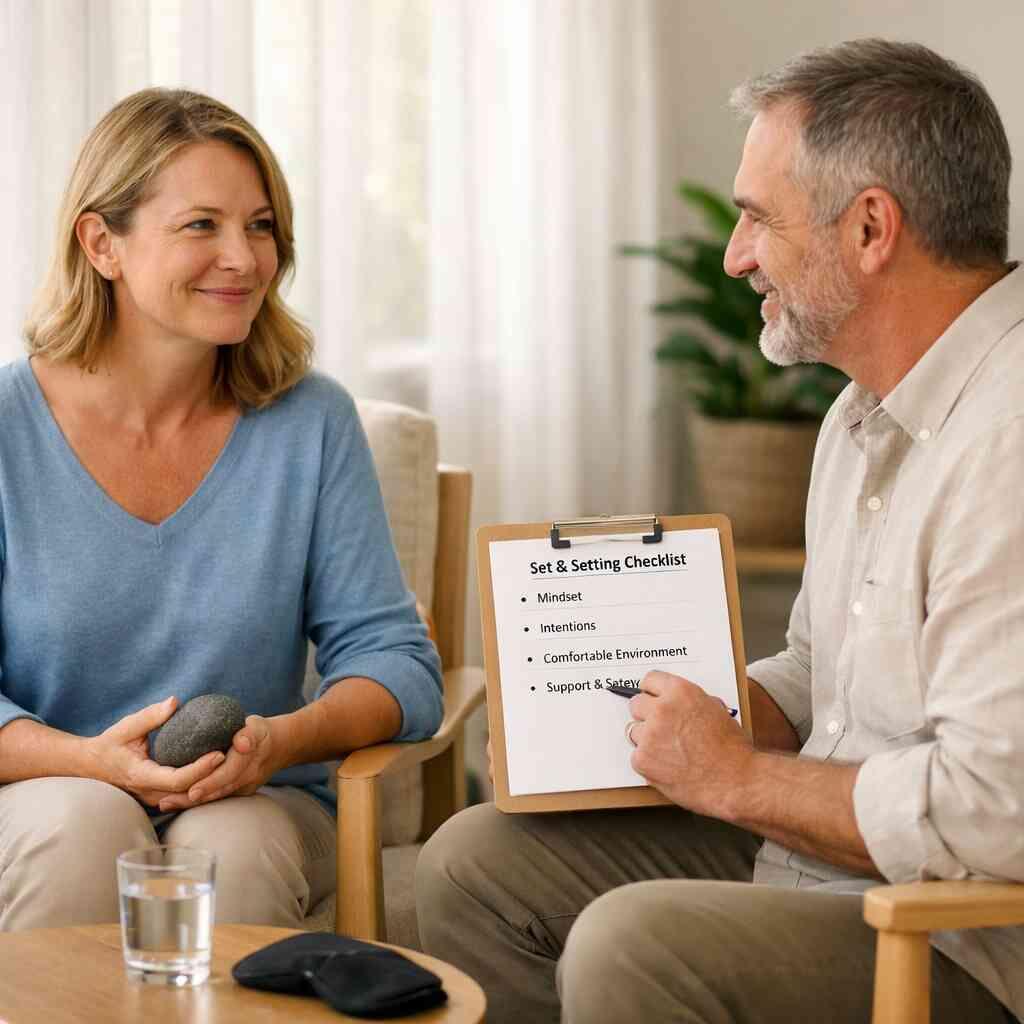
This is not the same as a cure. It is a possible opening. Emotional openness can help people notice grief, fear, or self-blame with less shame. But the experience alone is not the treatment. The therapy around it matters just as much. Without integration, the insight can fade fast. That is why psilocybin integration therapy is often discussed as part of the full model.
The session process that matters more than the mushroom
The most important part of this work often happens before any session begins. The American Psychiatric Association emphasizes the importance of careful evaluation and preparation in mental health treatment. Preparation shapes safety, trust, and the tone of the entire process. People often focus on the compound and overlook the environment. That is a mistake. In trauma care, environment can change the whole result of the experience. ### How psilocybin preparation shapes set and setting before any guided psilocybin session
Set and setting are shorthand for mindset and environment. Psilocybin set and setting basics are central because the same compound can feel very different in different circumstances. If you are already anxious, unsupported, or rushed, the experience may feel harder to manage. If you are calm, informed, and guided, the experience may feel more workable. That is why psilocybin preparation for guided sessions is not a side issue.
Preparation usually includes talking about intentions, fears, expectations, and practical needs. Some programs also discuss music, eye shades, support staff, and post-session plans. In a trauma-sensitive model, preparation may also include grounding skills, sleep planning, and support mapping. This is where psilocybin and talk therapy fit together well. The session starts long before the medicine.
What screening contraindications and psilocybin and medication interactions must be reviewed before treatment
Screening is not a box to check. It is a safety gate. Psilocybin screening contraindications should be reviewed carefully before anyone considers treatment. That process often looks at personal and family history, especially psychosis or bipolar disorder. It also looks at current medications, substance use, and recent medical changes. Here is what almost no online guide mentions: skipping this step can create real risk.
Medication review matters too. Psilocybin and medication interactions are especially important with antidepressants, antipsychotics, lithium, stimulants, and some anxiety medications. Some medicines may blunt effects. Others may raise safety concerns. That is why psilocybin and medication safety should be handled by a qualified clinician, not a guess from a message board. If you are searching from Miami or Tampa, ask how that review is done before anything else.
How psilocybin and talk therapy, psilocybin and somatic therapy, psilocybin and breathwork, and psilocybin integration therapy can work together
Psilocybin works best as part of a broader therapy plan. Psilocybin and talk therapy can help people make meaning from what they felt. Psilocybin and somatic therapy can help people notice body signals that words miss. Psilocybin and breathwork may support regulation before and after a session. Psilocybin and meditation can also help some people stay present while difficult material rises.
Integration is where the gains become usable. In psilocybin integration therapy support, the goal is to translate insight into daily life. That can mean journaling, boundary work, sleep support, or new coping routines. A person in Orlando once described it as “having a map after walking through fog.” That is a useful image. The session may open the door, but integration helps you walk through it.
What Florida trauma survivors should ask before they choose any psilocybin path
Florida is part of the national conversation on psychedelic care, but the legal and practical picture still needs care. You may find listings for psilocybin therapy Orlando, psilocybin treatment Miami, psilocybin clinic Tampa, or psilocybin therapist Jacksonville. Those labels should prompt questions, not assumptions. Florida trauma survivors deserve clear facts before they commit time, money, or hope.
What Florida psilocybin laws and legal psilocybin Florida mean right now for Tampa, Orlando, Miami, and Jacksonville
Legal psilocybin Florida is a complicated phrase. Psilocybin remains tightly restricted under federal law, and Florida law does not create a broad, routine clinical access path. Florida psilocybin laws are best checked through current legal guidance and the program’s own compliance language. If a provider sounds certain without explaining the law, be cautious. That caution protects you.
Local reality matters too. A person in Tampa may hear something very different from someone in Miami or Jacksonville, especially when searching for legal psilocybin Florida. Some services may focus on education, screening, or referrals connected to research. Others may be marketing language without a lawful clinical structure. If you want to review the current framework, start with psilocybin laws in Florida and ask direct questions. Clarity beats assumptions every time.
How to think about psilocybin therapy cost Florida, insurance psilocybin, and whether psilocybin clinical trials Florida may be relevant
Cost is a real concern. So is coverage. Many people search for psilocybin therapy cost in Florida and psilocybin insurance coverage in Florida because they need numbers before they can think clearly. Exact pricing can vary, and you should not trust anyone who gives blanket promises without context. Insurance psilocybin questions also remain complicated because coverage depends on legality, diagnosis, coding, and the specific service model.
Clinical trials may be a better fit for some people. Psilocybin clinical trials in Florida can offer a highly structured setting with research oversight. That is not right for everyone, but it can be a serious path for eligible participants. If money is tight, ask whether research, consultation, or referrals are available. You may also want to compare options against other trauma supports, including ketamine when clinically appropriate. The point is to choose the safest path, not the flashiest one.
Question to askWhy it mattersWhat is included in the fee?Preparation, session time, and integration may be priced separately.Is insurance accepted?Coverage for psilocybin-related care is often limited and plan-specific.Are trials available?Research may reduce cost, but eligibility is narrow.What follow-up is included?Aftercare can shape whether insights hold.### When psilocybin for PTSD, psilocybin for anxiety, psilocybin for treatment-resistant depression, or psilocybin for trauma survivors should be discussed with a qualified clinician and what next step actually makes sense
psilocybin for PTSD deserves careful clinical discussion when trauma symptoms stay severe despite solid care. The same is true for psilocybin for anxiety, especially when anxiety becomes pervasive and exhausting. Psilocybin for treatment-resistant depression may also come up when standard treatments have not brought enough relief. Some people also ask about psilocybin for generalized anxiety disorder, psilocybin for social anxiety, or psilocybin for existential anxiety. Those conversations should be measured, not rushed.
People also ask about psilocybin for veterans, psilocybin for first responders, psilocybin for alcoholism, psilocybin for smoking cessation, psilocybin for OCD, psilocybin for eating disorders, psilocybin for chronic pain, psilocybin for cluster headaches, and psilocybin for terminal illness. The evidence base differs by condition, and it is not even across all of them. That is why a qualified clinician matters. If you are comparing psilocybin therapy for trauma survivors with other options in Florida, ask for a screening conversation, a legal explanation, and a realistic care plan. You do not have to figure out every detail today. Start with one informed conversation, and make sure it is a real one.
Frequently Asked Questions
Question: What Is Psilocybin Therapy Florida for Trauma Survivors, and how is it different from casual psilocybin use or psilocybin microdosing?
Answer: Psilocybin therapy for trauma survivors is a structured, clinician-guided approach that typically focuses on preparation, guided psilocybin sessions, and psilocybin integration therapy afterward. It is very different from casual use, and it is also different from psilocybin microdosing or psilocybin macrodosing used without professional support. The therapeutic model matters because trauma care is not just about the compound itself; it is about psilocybin preparation, psilocybin set and setting, emotional safety, and thoughtful psilocybin aftercare. At Psilocybin Florida, the focus is on a compassionate, informed process that treats psilocybin-assisted therapy as part of a broader mental health conversation, not a hype-driven shortcut. If you are exploring magic mushroom therapy for emotional healing or psychedelic therapy Florida options, it helps to understand the difference between a real guided process and casual online claims.
Question: How can psilocybin-assisted therapy for trauma recovery support someone dealing with PTSD, anxiety, or complex trauma?
Answer: For some people, trauma leaves the nervous system stuck in hypervigilance, avoidance, emotional shutdown, or looping fear responses. Psilocybin-assisted therapy for trauma recovery is being studied because it may help create a window where rigid patterns feel more flexible, allowing a person to engage with emotions and memories in a new way. That is why people also ask about psilocybin for PTSD, psilocybin for anxiety, psilocybin for treatment-resistant depression, and psilocybin for trauma survivors. The important caution is that no one should promise outcomes. The best approach is a careful one: screening, preparation, guided psilocybin sessions, and integration support. Psilocybin Florida emphasizes a compassionate framework that can include psilocybin and talk therapy, psilocybin and somatic therapy, psilocybin and breathwork, or psilocybin and meditation when appropriate. For trauma survivors, the goal is not a dramatic claim; it is a grounded process that supports healing work in a safe, supportive setting.
Question: What should I know about psilocybin screening contraindications and psilocybin and medication interactions before starting treatment?
Answer: Screening is one of the most important parts of any psilocybin treatment conversation. Psilocybin screening contraindications may include personal or family history of psychosis, bipolar disorder, or other concerns that could make a guided psilocybin session unsafe. A clinician should also review current medications carefully, because psilocybin and medication interactions can matter a great deal. This is especially relevant for people asking about psilocybin and SSRIs, antidepressants, antipsychotics, lithium, stimulants, or anxiety medications. The point of screening is not to block hope; it is to protect safety and make sure the path forward is appropriate. At Psilocybin Florida, the process should always begin with a careful conversation about mental health history, current symptoms, and whether psilocybin treatment is a reasonable option. That kind of screening is essential whether someone is considering psilocybin therapy near me, psilocybin therapy Orlando, psilocybin treatment Miami, psilocybin clinic Tampa, or psilocybin therapist Jacksonville.
Question: What is the role of psilocybin integration therapy, and why does it matter after guided psilocybin sessions?
Answer: Psilocybin integration therapy is the part of the process that helps people make sense of what came up during a psilocybin journey and translate it into everyday life. A session may bring insight, emotional release, new perspective, or a sense of openness, but those experiences do not automatically become lasting change. Integration is where reflection becomes action. That can include journaling, talk therapy, boundary setting, sleep support, grounding tools, somatic work, or psilocybin peer support when appropriate. For many people, this is the stage that helps maintain the value of the experience after the session itself ends. In a trauma-informed model, psilocybin aftercare is just as important as the guided psilocybin sessions. Psilocybin Florida’s compassionate approach should prioritize integration because healing is more than a single moment; it is a process that continues afterward.
Question: Is legal psilocybin Florida available right now, and what should I ask about psilocybin therapy cost Florida or insurance psilocybin?
Answer: The legal status of psilocybin in Florida is complicated and can change, so it is important not to assume that every program offering psychedelic therapy Florida is operating under the same legal structure. Psilocybin remains tightly restricted under federal law, and Florida psilocybin laws should always be checked carefully through current legal guidance and the provider’s own compliance information. If you are comparing psilocybin clinical trials Florida, education-based services, or other care models, ask directly what is actually being offered. It is also reasonable to ask about psilocybin therapy cost Florida and insurance psilocybin, since pricing and coverage can vary widely depending on the service model, diagnosis, and whether research participation is involved. A trustworthy provider should be transparent about what is included, whether follow-up support is available, and whether the service is a clinical program, a research setting, or another type of support. Clear answers matter more than marketing language.
Question: What makes Psilocybin Florida a helpful resource for people looking into psilocybin for depression, psilocybin for addiction, or psilocybin therapy for trauma survivors?
Answer: Psilocybin Florida is positioned as a compassionate mental health advocate for people exploring psilocybin treatment, psilocybin-assisted psychotherapy, and broader psychedelic therapy Florida options. For someone dealing with depression, anxiety, PTSD, addiction, or trauma-related distress, the biggest need is often clarity: What is this? Is it safe? Is it legal? What does the process actually involve? A helpful resource should answer those questions without exaggeration. That includes discussing psilocybin for depression, psilocybin for addiction, psilocybin for alcoholism, psilocybin for smoking cessation, psilocybin for OCD, psilocybin for eating disorders, and psilocybin for veterans or first responders in a careful, evidence-aware way. It should also explain psilocybin neuroplasticity, psilocybin default mode network changes, and the possible role of psilocybin mystical experience or psilocybin ego dissolution without promising a cure. When a provider centers screening, preparation, guided psilocybin sessions, and integration support, it shows they understand that real care is about safety, context, and follow-through, not hype.