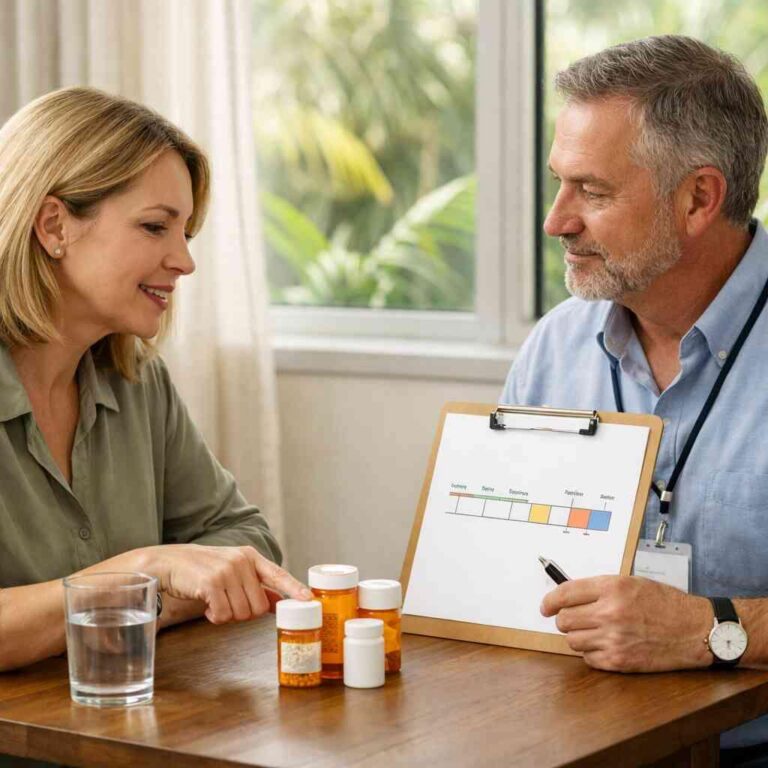
Depression that resists medication after years of trying can leave you feeling hollow and without options. Psilocybin therapy works through a fundamentally different mechanism than standard antidepressants. It temporarily quiets the brain’s rigid self-talk networks so new patterns can form. This approach creates a window of neuroplasticity that many describe as profoundly liberating. For patients across Florida, understanding how to harness this state is the key to healing.
When Medications and Talk Therapy Hit a Ceiling, Psilocybin Opens a New Door
Traditional treatments help many, but they often reach a plateau where symptoms merely become manageable. Psilocybin-assisted therapy intervenes at the root of the problem rather than just masking it. Research now shows that a single well-supported session can produce lasting shifts in perspective. This is not about escapism; it’s about accessing deeper emotional material that talk therapy alone rarely touches.
How the default mode network reset helps break rigid thought loops
The brain’s default mode network acts like a fortress of habitual thinking. In conditions like depression, PTSD, and OCD, the DMN becomes hyper-connected and locks in rumination. Psilocybin dramatically reduces blood flow to this network, which loosens the grip of negative thought loops. Functional MRI studies from Imperial College London reveal that the DMN disintegrates then reintegrates more flexibly after a session. That neurobiological reset allows patients to experience a fresh, unburdened perspective on their own lives.
This is why a single guided session can rival months of antidepressant use. Instead of numbing symptoms, the medicine helps the brain rewire its own default patterns. Patients often describe a profound sense of clarity and openness in the days following. This transient state of heightened neuroplasticity is exactly when therapeutic learning sticks. Strategic integration work transforms those insights into permanent emotional habits.
Understanding the DMN helps demystify the psilocybin compound pharmacology and effects that make this possible. The active compound derived from the psilocybe mushroom genus overview quickly converts to psilocin active metabolite mechanism in the body. Psilocin then binds to serotonin 5-HT2A receptors, which densely populate the DMN. This specific receptor activation is the key that unlocks the temporary disintegration of rigid mental maps. It’s a targeted, time-limited effect that creates the conditions for deep emotional relearning.
Why Johns Hopkins and COMPASS Pathways data shifted the paradigm for depression
Johns Hopkins University research demonstrated that psilocybin therapy produces large, sustained reductions in depression severity. In a landmark study, over 70% of participants rated the experience as one of the most meaningful of their lives. Half of those with treatment-resistant depression achieved remission after just two doses. Such outcomes are rarely seen with conventional antidepressants alone. These findings earned the compound FDA Breakthrough Therapy designation, signaling a major regulatory shift.
COMPASS Pathways built on this work with a large multi-site trial for treatment-resistant depression. Their data showed rapid improvement within days, with effects lasting up to 12 weeks. The therapy model combined a high-dose session with psychological support before and after. This protocol consistently outperformed placebo even in patients who had failed multiple medications. The success rates are prompting insurers and health systems to reconsider how they define effective mental health care.
For many Floridians, this evidence validates a search for new options. The paradigm shift means that profound inner experiences are now measurable clinical outcomes. It also challenges the idea that chronic depression is a permanent condition. Instead, a brief biological and psychological reset can restore a sense of agency. This growing body of data gives hope to those who have tried everything else without relief.
What Florida patients need to know about the evolving local therapy landscape
Florida is witnessing rapid growth in legal and accessible psilocybin services. Clinical trials are enrolling at universities and private research sites from Miami to Jacksonville. Decriminalization efforts in some municipalities have reduced legal risks for personal use. Right to Try legislation further expands pathways for those with serious conditions. However, navigating this landscape requires understanding the legal distinctions between clinical therapy, retreats, and spiritual facilitation.
Access to psilocybin therapy frequently asked questions will clarify what is currently available. Patients should verify whether a provider operates within FDA-approved expanded access programs or state-sanctioned models. The presence of trained facilitators who follow ethical guidelines is critical for safety. A well-established Florida psilocybin therapy center will transparently outline their screening and aftercare processes. This ensures that the experience is both legally compliant and therapeutically sound.
For those in specific regions, localized support is emerging. Options for psilocybin therapy in Miami-Dade County are expanding alongside community integration circles. Meanwhile, patients seeking psilocybin treatment near Broward County Florida can find qualified guides who understand local culture. People drawn to quieter settings often explore psilocybin journey retreats in Palm Beach Florida for a serene container. Regardless of location, verifying that a provider prioritizes medical screening and psychological safety remains essential.
1) Microdosing as a Subtle, Daily Recalibration Tool
Microdosing involves taking a fraction of a typical psychedelic dose on a structured schedule. It does not induce hallucinations or mystical experiences. Instead, it operates below the perceptual threshold while still influencing serotonin receptors. Many Florida patients use it to manage anxiety, improve focus, and lift the fog of low-grade depression. This strategy offers a gentle, self-directed complement to larger therapeutic journeys.
The science of sub-perceptual dosing and 5-HT2A receptor upregulation
Sub-perceptual doses still trigger significant neurobiological changes in the brain. Research suggests that psilocybin microdoses lead to upregulation of 5-HT2A receptors over time. This enhanced receptor density makes the brain more receptive to mood-stabilizing serotonin signaling. Unlike macrodosing, there is no ego dissolution or overwhelming perceptual shift. The effect builds gradually, often producing increased emotional flexibility and cognitive fluidity.
Studies examining microdosing in healthy populations report subtle improvements in convergent and divergent thinking. This translates into real-world benefits like decreased rumination and better problem-solving. The mechanism likely involves increased neuroplasticity without the disorienting destabilization of a full dose. Glial cell activity and BDNF expression may also play a role in maintaining neuronal health. These low-dose benefits make microdosing a practical strategy for daily mental wellness.
Patients report that after a few weeks, emotional reactions feel less automatic and more manageable. The space between a trigger and a response widens ever so slightly. This small window is where true behavioral change begins. Unlike SSRIs, which often blunt all emotions, microdosing tends to preserve feeling while reducing reactivity. The result is often described as a smoother baseline with more frequent moments of clarity.
Crafting a Fadiman-style or Stamets protocol for anxiety and focus
The Fadiman protocol typically involves one microdose day followed by two rest days. This cycle prevents tolerance buildup and allows integration of subtle shifts. Many people use it for anxiety because the off-days offer a chance to notice thought pattern changes. The Stamets protocol layers in lion’s mane mushroom and niacin for potential neurogenic synergy. This stack is popular among those seeking sharper focus and memory enhancement.
Choosing a schedule depends on your sensitivity and daily demands. Some Florida professionals microdose only on high-demand workdays for cognitive support. Others follow a regular schedule to stabilize chronic anxiety or depression. Careful journaling helps track subtle changes that might otherwise go unnoticed. Over weeks, these log entries reveal patterns that inform whether you should adjust the dose or timing.
Consistency and intentionality are more important than chasing an ideal protocol. The goal is not to feel the substance but to notice cumulative mental flexibility. A detailed resource on the psilocybin microdosing protocol Fadiman Stamets Florida can help you design a plan that fits your life. Always source your material from a trusted provider and start with the lowest effective dose. Professional guidance ensures you’re not overlooking contraindications or interactions with existing medications.
Pairing microdosing with mindfulness, breathwork, and neuroplasticity exercises
Microdosing works best when combined with practices that direct the brain’s enhanced plasticity. Mindfulness meditation trains attention and allows you to observe mental loops without reacting. Breathwork regulates the nervous system and deepens the somatic awareness that microdosing can amplify. Neuroplasticity exercises, like learning a new skill or deliberately reframing negative thoughts, cement the changes. This active partnership between chemistry and conscious effort multiplies the benefits.
During a microdosing cycle, the brain’s resistance to change is lower than usual. That’s the ideal time to practice cognitive reframing or gratitude journaling. Even small behavioral adjustments can stick more quickly and feel less effortful. Many Florida patients incorporate morning pages or guided body scans into their protocol days. These daily anchors turn a subtle neurochemical effect into a transformational habit.
The synergy is similar to how physical therapy rebuilds strength after an injury. The medicine provides the biological permission for change, but you supply the movement. Without the movement, plasticity has no direction and may fade. With it, the brain builds stable, resilient pathways that persist beyond the microdosing period. This integrated approach distinguishes strategic microdosing from casual self-experimentation.
2) Macrodosing Journeys for Root-Level Trauma and Existential Distress
A macrodose brings about a full psychedelic experience that can feel like a days-long emotional journey compressed into hours. It temporarily dissolves the ego structure, allowing you to witness core wounds from a place of safety. This strategy is particularly powerful for PTSD, deep depression, and end-of-life anxiety. The experience is not a quick fix but a profound catalyst that reorders your internal landscape. Proper preparation and integration are non-negotiable for transforming that intensity into healing.
When high-dose sessions suit PTSD, treatment-resistant depression, or end-of-life anxiety
Trauma embeds itself in the body’s survival responses and the brain’s hypervigilant architecture. High-dose psilocybin sessions can access these deep layers without requiring years of exposure therapy. The medicine often reveals the emotional core of a traumatic memory so you can reprocess it with compassion. For veterans and first responders in Florida, this approach is opening doors that traditional services have not. The relief can be immediate, though full integration takes weeks or months.
For psilocybin for treatment-resistant depression Florida, macrodosing breaks through the numbness that nothing else has reached. When multiple antidepressants have failed, a single guided journey can reset the emotional range. Many people feel genuine joy for the first time in years. This isn’t a temporary high but a recalibration of the brain’s capacity for positive emotion. Careful follow-up work maintains and extends these gains over time.
Patients facing a terminal diagnosis often grapple with existential terror that talk therapy cannot touch. A macrodose can facilitate a mystical experience that reframes death as part of a larger whole. The anxiety doesn’t necessarily vanish, but the fear of death often transforms into a sense of meaning. This shift is well-documented in studies with cancer patients and those with life-threatening illness. For these individuals, the session can bring peace that pharmaceuticals alone cannot provide.
The four-phase integration model and how to prepare your ego dissolution experience
The FIML (Four-Phase Integration Model of Psilocybin Therapy) structures the process into preparation, the session, early integration, and ongoing practice. Preparation involves psychological education, intention-setting, and building trust with your guide. You’ll explore your fears about losing control, because ego dissolution can feel like dying. Understanding that this is temporary and therapeutic reduces resistance during the journey. Solid preparation also includes conforming to a psilocybin session screening contraindications review to rule out risks like psychosis or severe cardiac issues.
The session itself is an inward journey where you surrender to the experience. Your guide ensures physical safety while giving you space to confront deep material. During the peak, the sense of self may fragment, followed by a recompiling phase full of insight. It’s essential not to fight this process but to trust the container. After the acute effects fade, a period of gentle processing begins immediately.
Early integration focuses on capturing insights before they slip away. You’ll have a follow-up therapy session within 24 to 72 hours to start weaving the narrative. The model then extends into a longer phase of behavioral changes and emotional stabilization. This structure prevents the experience from merely becoming a memory that fades. It turns insights into a revised personal story you’ll live by.
Creating a sanctuary set and setting from Miami to Jacksonville for optimal surrender
Your physical environment directly shapes the depth and safety of the journey. A dimly lit room, a comfortable couch, and carefully curated music can ease you into the vulnerable state. Many Florida providers design spaces that feel like a calm living room rather than a clinic. Natural elements like wood, soft fabrics, and gentle lighting reduce the anxiety of the clinical setting. The goal is to feel protected enough to let go completely.

Florida’s climate and topography offer unique advantages for creating this sanctuary. The sound of ocean waves or rain on a metal roof can serve as a grounding anchor during difficult moments. Retreat centers from Miami to Jacksonville utilize screened porches and garden views to blur the line between indoors and nature. Being able to step outside briefly during the tail end of a session can be profoundly soothing. This connection to Florida’s natural beauty deepens the therapeutic container.
Trust between you and your guide is the most critical element of set. They should be someone you feel understands your history and respects your autonomy. A qualified psilocybin therapist interview questions resource can help you vet their experience and approach. You’re looking for someone who doesn’t impose interpretations but helps you find your own meaning. The right guide creates the psychological safety that makes full ego dissolution tolerable and transformative.
3) Set and Setting Optimization Tailored to Florida’s Climate and Culture
The mental and physical context of your psilocybin session determines whether you experience healing or distress. Set refers to your internal mindset, while setting is your external environment. Both must be intentionally crafted for a therapeutic outcome. Florida’s unique blend of subtropical light, water, and laid-back culture offers distinct advantages. Optimizing these elements turns a generic trip into a true medicine session.
Why your environment during a session can make or break the mystical experience
A chaotic or sterile environment can trigger paranoia and resistance during a vulnerable state. The brain on psilocybin becomes hypersensitive to sensory input, so harsh lighting or intrusive noise can derail the journey. Conversely, a warm, curated space signals safety to the nervous system. When you feel safe, the medicine can guide you naturally toward the psilocybin mystical experience facilitation that underlies therapeutic change. This mystical quality-feelings of unity, sacredness, and profound insight-is highly correlated with positive long-term outcomes.
Control over the sensory landscape is fundamental to facilitating this state. Music with a deliberate emotional arc can mirror the inner journey and carry you through difficult peaks. Eye shades and soft blankets reduce external stimuli so you can dive inward. Interruptions, like a ringing phone or unexpected person entering, can shatter the sense of sanctuary. Skilled facilitators anticipate every detail to protect the uninterrupted flow.
Studies show that participants who report strong mystical experiences have the greatest symptom reductions. The environment directly influences whether such an experience occurs. A chaotic or clinical setting may leave you stuck in fight-or-flight mode. That’s why preparing the space is considered as essential as screening the patient. The result is a container where profound inner work feels possible rather than threatening.
Using natural light, water, and Florida’s quiet retreat spaces to deepen inner work
Natural light regulates your circadian rhythm and can profoundly influence your emotional state during a session. Florida’s abundant sunshine, filtered through sheer curtains, provides a gentle, organic illumination. Late afternoon light shifting to dusk mirrors the transition from the peak experience to reintegration. Being near water-the ocean, a spring, or a calm lake-adds a soothing auditory backdrop. The rhythm of waves or flowing water can anchor you during moments of intense emotional processing.
Quiet retreat spaces tucked away from urban noise capitalize on this natural advantage. Instead of hearing traffic, you hear birdsong and wind through palms. This auditory environment cues the brain to relax at a primal level. Many providers in Florida design their session rooms to open onto screened porches with views of live oaks and ferns. That connection to the living world reinforces the feeling of being held by something larger than yourself.
A practice like optimizing set and setting for psilocybin Florida involves selecting a location that matches your comfort needs. Some patients prefer a modern clinical setting with subtle nature elements. Others feel safer in a rustic, retreat-like environment far from the city. There is no single correct setting, only what allows you to lower your defenses without fear. A thoughtful provider will help you choose and personalize your space before the journey begins.
Screening contraindications and designing a personalized sensory landscape
Not everyone is a good candidate for macrodose therapy, regardless of how well the set and setting are optimized. A thorough medical and psychological screening is mandatory. Conditions like a personal or family history of psychotic disorders, recent cardiovascular events, or certain medication interactions can pose serious risks. The screening process also identifies fears and sensory sensitivities that can be accommodated. This ensures you enter the session with as few internal landmines as possible.
Once cleared, you can design a sensory landscape that aligns with your personal history and preferences. Some people respond best to minimalist, uncluttered spaces with soft whites and grays. Others need the comfort of familiar objects, like a favorite blanket or a framed photo. The playlist should be non-lyrical, emotionally balanced, and structured to guide the arc of the experience. Your guide will work with you to identify any particular sounds or images that might trigger distress.
Personalization extends to cultural and spiritual elements as well. A Latina patient in Miami might want fresh bougainvillea in the room and a playlist with subtle Latin American flute. A veteran might prefer an eagle feather or a grounding stone as a tactile anchor. These details communicate that your identity and history are welcome in the healing space. The more the environment reflects your authentic self, the deeper you can surrender into the process.
4) Structured Integration Aftercare That Transforms Insights into Daily Life
The real work begins after the acute effects of the medicine fade. Without integration, profound insights can dissipate into mere memory within weeks. Structured aftercare systematically translates your journey’s revelations into lasting behavioral and emotional change. This phase determines whether you experience a temporary mood lift or genuine, enduring transformation. Florida providers who prioritize integration see significantly higher long-term success rates.
How to use an integration workbook and peer circles after a psilocybin journey
An integration workbook provides a structured way to process the journey’s symbolism and emotional content. You’ll respond to prompts about the themes that emerged, the images you encountered, and the somatic sensations you felt. Writing helps move internal experiences from vague feelings into concrete language. This act of articulation is a core step in psilocybin journey integration workbook techniques that solidify new neural pathways. Revisiting your entries weeks later reveals a cohesive narrative that may not have been obvious at first.
Peer integration circles provide a community of others who understand the psychedelic experience without judgment. Sharing your story in a small, facilitated group normalizes the often-bewildering aftereffects. Hearing others articulate similar realizations reinforces your own sense of meaning. These circles reduce the isolation that can follow a powerful mystical experience. They also offer practical strategies for applying insights to relationships, work, and self-care.
The combination of solitary reflection and communal sharing is potent. The workbook gives you a private space to be completely honest. The circle gives you the mirror of communal validation. Both methods anchor the fleeting insights into your day-to-day identity. Consistent engagement with these tools prevents the dreaded post-session “fade” that can happen without structure.
Synergies with somatic experiencing, talk therapy, and meditation for lasting change
Psilocybin often releases trauma that is stored in the body as tension, pain, or numbness. Somatic experiencing helps you process these physical residues without re-traumatization. During a session, the body may tremble, stretch, or assume protective postures. A somatic therapist can guide you to complete these interrupted survival responses in subsequent sessions. This body-based work deepens and grounds the psychological insights.
Talk therapy remains essential for making cognitive sense of the material. A skilled integration therapist can help you identify the limiting beliefs that surfaced during the journey. Together, you’ll reframe those beliefs and experiment with new behaviors. For example, a journey might reveal a core belief of unworthiness. Your therapist will help you design small, daily actions that contradict that belief and build self-trust.
A daily meditation practice extends the neuroplastic window that psilocybin opened. Even ten minutes of focused breathing each morning stabilizes the nervous system and maintains mindfulness. Over weeks, this consistency reduces the tendency to slip back into automatic negative thinking. Many former patients report that a post-journey meditation habit is the single most protective factor against relapse. The synergy of these three modalities-somatic, cognitive, and contemplative-creates a comprehensive aftercare scaffold.
Aftercare planning strategies that prevent relapse into old anxiety and depression patterns
Your aftercare plan should be as detailed and personalized as the preparation for the journey itself. The first month after a macrodose is typically the most vulnerable and the most malleable period. Concrete strategies like blocking off weekends for rest, scheduling integration sessions in advance, and informing a trusted friend keep you on track. You’ll also need a crisis plan for moments when difficult emotions resurface unexpectedly. That plan might include grounding techniques, a call list, or a prearranged check-in with your guide.
Many people underestimate how destabilizing a return to normal life can feel. After profound ego dissolution, the old routines and social roles may seem foreign. This disorientation is a natural part of reconstructing identity but can spike anxiety if unmanaged. Therefore, your aftercare plan must include gradual reentry steps. Rushing back into high-stress work or toxic relationships too soon can overwhelm the nascent neural patterns.
Preventing relapse also means identifying your unique depression or anxiety warning signs early. Your integration therapist will help you map out a personal early-warning system. At the first sign of sleep disruption, irritability, or isolation, you deploy a pre-planned intervention. This might be an emergency breathwork session, a peer circle meeting, or a booster microdosing cycle. For many, learning more about psilocybin aftercare integration workbook Florida offers a reusable template to maintain momentum. The goal is to catch the slide before it gains speed, using the self-awareness you gained in the journey.
5) Navigating Florida’s Legal Framework and Building a Safe Referral Team
Engaging with psilocybin therapy inside Florida’s legal boundaries requires careful thought. The landscape is a patchwork of federal restrictions, state-level reforms, and local decriminalization efforts. Building a referral team of trustworthy professionals is the smartest way to protect yourself and ensure ethical care. This team will guide you through legal options, medical screening, and ongoing integration support. The right network turns a legally complex situation into a clear, safe pathway.
Understanding Right to Try, decriminalization efforts, and clinical trial enrollment
The Right to Try Act allows certain terminally ill patients to access investigational drugs, including psilocybin, outside of clinical trials. This federal law provides a potential route for those with life-threatening conditions who have exhausted approved options. In Florida, a physician must certify that all standard treatments have been tried. The process is strict, but for eligible patients it offers a legal avenue. Additionally, local decriminalization efforts in cities like Miami and Orlando have reduced penalties for personal possession, though they do not legalize commercial sale. Clinical trial enrollment strategies in Florida are expanding, with research sites actively recruiting participants for studies on depression, PTSD, and anxiety. Patients can explore clinical trial enrollment strategies Florida to find opportunities. Understanding these options helps patients make informed decisions about their treatment pathway.
Frequently Asked Questions
Question: I read your blog post “Top 5 Psilocybin Therapy Strategies for Florida Patients” and I’m especially interested in strategies for treatment-resistant depression. Which approach does Psilocybin Florida recommend and how do you personalize it?
Answer: For treatment-resistant depression, our center often combines macrodosing protocol design with structured integration and microdosing maintenance. The blog’s strategies – from default mode network reset through a high-dose journey to daily recalibration with sub-perceptual dosing – form a comprehensive pathway. We design a personalized psilocybin treatment approach for depression based on your medical history, screening for contraindications, and tailoring optimizing set and setting for psilocybin sessions to your comfort. Our psilocybin-assisted psychotherapy model incorporates the latest research from Johns Hopkins and COMPASS Pathways, ensuring measurable relief where multiple antidepressants have failed. After the macrodose, our integration workbook techniques and peer integration circles help translate insights into lasting mood improvements. We’re with you every step, from initial screening through long-term aftercare, to turn the strategies into a safe, effective healing experience.
Question: How does Psilocybin Florida help patients integrate microdosing into their mental health plans safely and effectively?
Answer: We guide you through integrating microdosing into a holistic psilocybin therapy method by starting with a thorough assessment to confirm there are no medication interactions or contraindications. Our team educates you on sub-perceptual protocols like the Fadiman or Stamets method, part of modern psilocybin microdosing strategies, and helps you track subtle changes in focus, anxiety, and mood. We pair microdosing with mindfulness, breathwork, and neuroplasticity exercises to amplify benefits. As a Florida legal psilocybin clinic, we source pharmaceutical-grade material and ensure you follow a lawful pathway-whether through Right to Try, decriminalization zones, or clinical trial enrollment strategies Florida. Ongoing support includes integration sessions where we adjust your regimen based on your log data, making microdosing a reliable anchor for your mental health routine.
Question: What does a macrodosing protocol design look like at your center, and how do you ensure a safe ego dissolution experience?
Answer: A macrodose protocol at Psilocybin Florida follows a four-phase integration model (FIML) with rigorous preparation, a supervised session, and extensive aftercare. Preparation includes psychological education, intention-setting, and a deep dive into your trauma history and expectations about psilocybin ego dissolution guidance. We personally design your set and setting-using Florida’s natural light, calming water sounds, and private retreat spaces to facilitate a psilocybin mystical experience facilitation. During the session, a trained guide remains present, ensuring physical safety and emotional containment. Afterward, early integration the next day captures insights, and ongoing therapy with our integration therapists cements lasting change. Screening for contraindications, such as personal/family psychotic history or cardiovascular issues, is mandatory to ensure the experience is safe and transformative, following psilocybin for treatment-resistant depression protocol best practices.
Question: Can you explain your approach to optimizing set and setting for psilocybin sessions, especially given Florida’s unique environment?
Answer: We believe optimizing set and setting for psilocybin sessions is a cornerstone of effective psilocybin therapy in Florida. Our approach harnesses the state’s subtropical climate: session rooms feature diffused natural light, views of live oaks and gardens, and the gentle sound of rain or ocean waves to soothe the nervous system. We work with you to craft a personalized sensory landscape-music, aromas, tactile objects-that reflects your cultural background and comfort needs. This intentional design, combined with rigorous mindset preparation through pre-session counseling, sets the stage for a mystical experience. Our centers in Miami, Tampa, Orlando, and Jacksonville offer serene, retreat-like environments that help you surrender deeply, knowing you’re held in a safe container. We also incorporate the strategies for psilocybin therapy in Florida that you’ll find in our blog, ensuring every session is a true therapeutic journey.
Question: What aftercare planning strategies do you offer to prevent relapse after a psilocybin journey?
Answer: Our psilocybin aftercare planning strategies are built around the principle that integration is where healing solidifies. Immediately after a session, we provide a structured integration workbook with prompts to capture insights. You’ll attend psilocybin aftercare peer integration circles where you share experiences in a supportive community. We also connect you with somatic experiencing practitioners to release stored trauma and with talk therapists for cognitive reframing. A daily meditation program extends the neuroplastic window, and we design a personalized relapse-prevention plan that identifies early warning signs and pre-planned interventions. For long-term resilience, we may recommend booster microdosing cycles or follow-up sessions, always aligning with holistic psilocybin therapy methods. This multi-layered aftercare system keeps depression, anxiety, or PTSD symptoms from returning, turning your journey into sustainable transformation.