
Top 5 Emerging Psilocybin Florida Trends in 2025
The Dawning Mycelial Sunrise: Florida’s Psychedelic Renaissance Begins
A Dawning Mycelial Sunrise Introduction
Florida stands upon the brink of a genuine psilocybin awakening. Researchers, clinicians, and policymakers now recognize magic mushrooms as catalysts for mental wellness. The following series explores five unfolding trends destined to reshape treatment landscapes statewide. Before diving deeper, we set the stage with a sunrise view of today’s momentum. Our preview uses evidence-based data, community voices, and the latest regulatory signals. For many Floridians, accessing cutting-edge psilocybin care in Florida 2025 already feels tangible, not theoretical.
Spearheading a Floridian psychedelic renaissance
Florida’s mental health community has long searched for innovative answers to depression, anxiety, and addiction. Psilocybin treatment now steps into that void with compelling science and compassionate practice. Early pilot programs report rapid symptom relief where conventional therapies stalled. Community leaders champion social equity plans so every zip code can benefit from psilocybin therapy in Florida. As momentum grows, churches, veterans’ groups, and wellness collectives collaborate, stitching a statewide renaissance.
Cultural acceptance moves in tandem with policy and research. Music festivals highlight responsible microdosing workshops, while bookstores host panels on psilocybin mushrooms in culture and history. Floridian artists weave magic mushrooms into murals celebrating neuroplasticity and hope. Each creative stride normalizes conversations around psilocybin microdosing in Florida, dismantling decades of stigma. Together, these grassroots movements prepare citizens for the larger reforms arriving in 2025.
Why 2025 marks the inflection point for magic mushrooms
Several converging factors make 2025 uniquely decisive. First, Florida psilocybin legislation 2025 is poised for bipartisan committee hearings, signaling rare unity across party lines. Second, federal decisions on FDA breakthrough therapy status will influence statewide clinic readiness, unlocking insurance discussions for psilocybin treatment for depression. Third, clinical psilocybin trials Florida institutions conduct now reach publication, giving lawmakers fresh, local evidence.
Economically, Florida’s tourism boards forecast mushroom-centered wellness retreats to generate significant revenue, deepening political appetite for reform. At the same time, AI-driven research tools accelerate psilocybin brain imaging studies, shortening timelines from hypothesis to insight. This technological leap ensures data-backed safety frameworks inform public health strategies by 2025, tipping the scales toward broad acceptance.
Positioning Psilocybin Treatment Florida at the helm of change
Psilocybin Treatment Florida has prepared for this moment through rigorous clinical protocols and holistic patient pathways. Our therapists combine evidence with empathy, guiding clients through transformative psilocybin-assisted psychotherapy Florida sessions. By prioritizing harm reduction and integration, we ensure experiences translate into lasting behavioral change. Dedicated research liaisons track every emerging study, adopting best practices the moment data justifies action.
Education remains central to our mission. We host community forums, publish white papers, and maintain an ever-growing resource hub. Readers seeking quick answers can explore our detailed overview on psilocybin FAQs for Floridians to demystify dosage, safety, and legality. Our proactive stance guarantees patients, clinicians, and policymakers receive guidance grounded in both science and compassion, anchoring Psilocybin Treatment Florida as the trusted lighthouse guiding the state’s psychedelic voyage.
1) Bipartisan Momentum Florida Psilocybin Legislation 2025
Inside the bipartisan psilocybin bill shaping Tallahassee
The draft legislation establishes a phased rollout, beginning with tightly monitored clinical pilot sites linked to university research hospitals. Lawmakers specified rigorous training standards to certify facilitators in psilocybin-assisted psychotherapy Florida, ensuring therapy rooms match hospital-grade safety. Proposed metrics require quarterly reporting on patient outcomes, reinforcing evidence-based governance. Additionally, explicit language mandates collaboration with indigenous advisors, honoring historical knowledge surrounding psilocybin mushrooms. Such culturally sensitive provisions distinguish this bill from earlier, narrower attempts.
Beyond clinical oversight, the bill outlines statewide advisory boards featuring neuroscientists, ethicists, and patient advocates. Boards will recommend dosage ranges, integration best practices, and harm reduction outreach to meet evolving data. Funding originates from modest licensing fees, deliberately lower than cannabis frameworks to discourage monopolization. Legislators also demand data transparency, enabling residents to track program efficacy online. Together, these clauses weave accountability, accessibility, and innovation into one forward-thinking statute.
Magic mushroom decriminalization Florida and safe access programs Miami
Parallel to medical regulation, municipalities push for decriminalization to reduce nonviolent arrests linked to magic mushrooms. Orlando and St. Petersburg councils already passed resolutions urging police to treat personal possession as lowest enforcement priority. Advocates argue decriminalization frees resources for addiction services and supports civil liberties. Early crime statistics reveal no uptick in public safety issues, bolstering reform momentum. Consequently, statewide decriminalization language gains traction among moderate lawmakers.
Miami leads operational readiness through pioneering safe-use pilots housed within community health centers. Residents can learn dosing protocols, integration techniques, and legal rights in bilingual workshops. Importantly, Miami-Dade commissioners partnered with university ethicists to craft evidence-led curricula. Citizens now locate trusted facilitators through a public registry, reducing underground market risks. These local actions demonstrate pragmatic pathways to harmonize public health with personal freedom.
One standout initiative offers culturally attuned education and direct referral pathways to safe access psilocybin services in Miami-Dade County. Through this program, low-income residents receive sliding-scale consultations, ensuring equity masks no socioeconomic barrier. Multilingual counselors guide participants from screening to post-session integration, weaving harm-reduction into every step. Early satisfaction surveys report significant trust gains among historically marginalized neighborhoods. Analysts predict Miami’s framework will become the template other counties emulate.
Social equity licensing pathways for underserved communities
Legislators recognize historic disparities in drug enforcement and aim to rectify harms through targeted licensing provisions. Priority slots will go to applicants from neighborhoods disproportionately affected by past prohibition. These operators receive fee waivers, technical assistance, and low-interest microloans to launch psilocybin integration therapy centers Florida. Community stakeholders applaud this model for turning policy reform into tangible economic justice. Moreover, mentorship programs pair new licensees with established clinicians to foster high-quality care.
Educational stipends further widen the talent pipeline for aspiring facilitators from underrepresented groups. State agencies plan scholarships covering accredited psilocybin therapist training programs Florida, closing the expertise gap. In parallel, accelerator grants encourage cooperatives to pursue sustainable psilocybin cultivation Florida, embedding local wealth creation. By intertwining economic opportunity with cultural restoration, equity clauses could redefine how psychedelic industries grow. Ultimately, meaningful participation by all Floridians strengthens legitimacy and public trust.
Insurance coverage prospects for psilocybin therapy in Florida
Insurers once viewed psychedelic care as fringe, yet mounting clinical data shifts actuarial calculations. Florida carriers now evaluate cost-benefit models comparing short-term psilocybin therapy to lifelong antidepressant regimens. Early spreadsheets reveal potential savings through reduced hospitalization and lower medication reliance. Consequently, pilot reimbursement programs appear in corporate benefit packages, signaling a financial tipping point. Legislators intend to incentivize wider adoption via tax credits for plans including psychedelic coverage.
Regulatory clarity will also flow from anticipated FDA breakthrough therapy decisions, which could classify psilocybin protocols similarly to ketamine or TMS. Should federal endorsement arrive, state insurance commissioners may fast-track standardized billing codes for psilocybin treatment for depression. Hospitals already draft compliance manuals to integrate electronic health records with novel procedure codes. Once administrative pathways solidify, experts predict coverage expansion will unfold rapidly across provider networks. Florida’s proactive stance thus positions patients to benefit the moment federal gates open.
2) Precision Healing Clinical Psilocybin Trials and Brain Imaging
Clinical psilocybin trials Florida targeting depression and anxiety
Florida’s research consortium, spanning Gainesville to Miami, now hosts the nation’s densest cluster of clinical psilocybin trials Florida. Investigators enroll adults with treatment-resistant depression and generalized anxiety, applying double-blind crossover protocols. Early data reveal remission rates exceeding leading SSRIs after one guided session. Moreover, symptom relief persists at three-month follow-up when combined with psilocybin-assisted psychotherapy Florida integration visits. These outcomes reinforce hopes for scalable psilocybin treatment for depression pathways.
Consequently, principal investigators share interim findings with the bipartisan psilocybin bill Florida senate committees, strengthening evidence for humane reform. Trials adhere to rigorous consent standards, reflecting psilocybin harm reduction initiatives Florida already active in community clinics. Participants receive preparatory counseling, two psilocybin sessions, and weekly integration, mirroring protocols destined for statewide adoption in 2025. Funding arrives through public-private grants, signaling confidence among biotech investors and psilocybin startups Florida 2025 entrepreneurs. By aligning science, policy, and capital, Florida builds a solid foundation for transformative mental-health innovation.
Psilocybin brain imaging research University of Florida breakthroughs
Neuroscientists at the University of Florida deploy high-resolution fMRI and magnetoencephalography to map psilocybin-induced neural reorganization. Preliminary scans show synchronized activity across the default mode network and emotional regulation circuits within minutes of dosing. This connectivity realignment correlates with durable mood elevation reported in clinical diaries. Researchers present findings in Washington, positioning psilocybin brain imaging research University of Florida at the forefront of national conversation. Their work supplies the physiological blueprint policymakers crave when assessing future reimbursement frameworks.
Moreover, diffusion-tensor imaging reveals increased white-matter integrity one month post-session, bolstering hypotheses around neuroplastic repair. These data, recently highlighted as brain imaging breakthroughs on psilocybin wellness, draw interdisciplinary teams from artificial intelligence and psychiatry. Engineers train algorithms on voxel patterns to forecast emotional outcomes, accelerating personalized protocol design. Meanwhile, medical students enroll in specialized electives, ensuring future therapists comprehend neurobiology as deeply as counseling technique. Ultimately, Florida’s imaging laboratories provide the evidence base that catalyzes global confidence in magic mushrooms for mental health.
FDA breakthrough therapy status and statewide clinic readiness
The FDA now reviews phase-III dossiers from multiple sponsors, and analysts predict breakthrough therapy designation by mid-2025. Such federal momentum energizes psilocybin FDA breakthrough therapy status Florida clinics already investing in clean-room preparation suites. Administrators integrate electronic consent platforms, ensuring compliance once commercialization begins. Simultaneously, insurers pilot actuarial models anticipating psilocybin therapy insurance coverage Florida across large employer plans. As anticipation builds, Floridian stakeholders coordinate webinars to explain scheduling changes to patients and physicians alike.
Moreover, training academies accelerate curricula to certify 1,000 additional facilitators before the designation lands. These psilocybin therapist training programs Florida teach pharmacology, cultural humility, and crisis intervention using immersive simulation labs. County health departments also update inspection manuals, drawing on existing standards from psilocybin integration therapy centers Florida. By harmonizing oversight early, the state prevents bottlenecks that plagued prior cannabinoid rollouts. Consequently, Florida could welcome the first federally endorsed magic-mushroom clinics the day approval arrives.
AI personalized psilocybin dosing and microdosing regimen Florida
Artificial intelligence now infiltrates every dosage decision, turning demographic, genomic, and psychological data into precise recommendations. Start-ups collaborate with hospital systems to deploy AI-personalized psilocybin dosing Florida dashboards inside consultation rooms. The software suggests capsule potency, session length, and follow-up schedule, referencing thousands of anonymized outcomes. Clinicians maintain ultimate authority, yet decision support shortens assessment time and strengthens safety. Notably, algorithms learn continuously as new clinical psilocybin trials Florida publish updated endpoints.
Meanwhile, consumer wearables track sleep, mood, and heart-rate variability, adjusting psilocybin microdosing regimen Florida protocols in real time. Users receive color-coded alerts when biometrics indicate tolerance shifts or emotional volatility. Integration coaches within psilocybin telehealth services Florida review dashboards weekly, offering rapid adjustments without clinic travel. This responsive loop exemplifies digital harm-reduction, complementing existing psilocybin safe access programs Miami. As the data lake grows, Florida becomes the proving ground for precision psychedelic medicine worldwide.
Psilocybin PTSD treatment for veterans and chronic migraine cohorts
Veteran advocacy groups partner with university hospitals to pioneer psilocybin PTSD treatment for veterans Florida protocols. Sessions incorporate military cultural competency, grounding exercises, and structured debriefs to mitigate re-traumatization risk. Preliminary outcomes demonstrate dramatic reductions in nightmares and hypervigilance at six-month evaluation. Consequently, legislators earmark funds for expanded enrollment along the Florida coast. This program aligns with PTSD healing insights on psilocybin for veterans available nationwide.
Parallel studies examine psilocybin chronic migraine therapy Florida, offering hope to patients exhausted by triptan cycles. Researchers administer low-dose psilocybin monthly, observing significant reduction in attack frequency and intensity. Participants also report improved mood, supporting holistic recovery rather than symptom suppression alone. Neurologists collaborate closely with psychiatrists, reflecting Psilocybin Treatment Florida’s integrative philosophy. These successes will soon intersect with addiction recovery supported by psilocybin in Florida, demonstrating the molecule’s versatility across disorders.
3) Beyond the Couch Psilocybin Assisted Psychotherapy and Telehealth Expansion
Rise of psilocybin telehealth services Florida and virtual integration
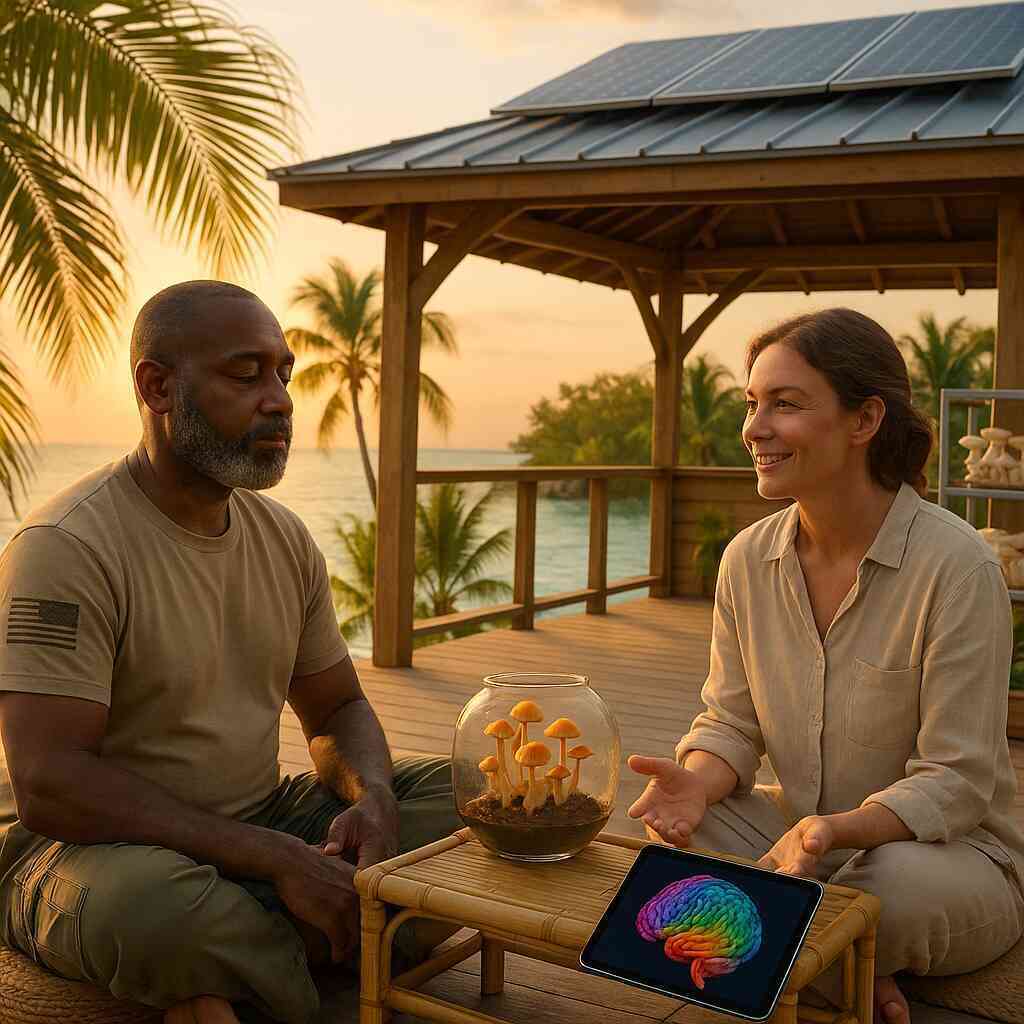
Telemedicine once served mainly rural patients, yet 2025 ushers in a statewide network of psilocybin telehealth services Florida residents trust. Licensed clinicians now conduct preparatory assessments, dosage education, and post-journey integration through HIPAA-secure video portals. Because appointments happen at home, mobility-limited clients finally access magic mushrooms for mental health without travel stress. Additionally, therapists employ virtual reality headsets to rehearse breathing techniques that reduce anxiety during dosing day. As reimbursement codes stabilize, providers bundle digital appointments with in-person sessions, creating hybrid care that maximizes convenience and safety.
Remote integration groups also flourish, linking participants across counties for peer support within moderated forums. These gatherings use encrypted platforms and strict anonymity guidelines, which nurture vulnerability while protecting personal data. Weekly meetings explore cognitive reframing, mindfulness, and creative expression, translating psychedelic insights into daily habits. Because schedules vary, asynchronous video lessons allow members to catch up whenever life permits. Collectively, telehealth and virtual communities dismantle geographic barriers, proving healing need not be confined to clinic walls.
Psilocybin therapist training programs Florida building workforce
Demand for qualified guides skyrockets alongside new clinics, so universities launch accelerated psilocybin therapist training programs Florida professionals crave. Curricula blend neuroscience, cultural ethics, and trauma-informed counseling, ensuring graduates navigate complex emotional landscapes with confidence. Faculty emphasize experiential learning through supervised practicums that pair students with seasoned facilitators. Moreover, partnerships with indigenous advisors embed respect for ancestral knowledge into every syllabus module. As a result, trainees leave with both scientific rigor and cultural humility.
To widen access, scholarships target veterans, bilingual speakers, and applicants from historically underserved communities. State grants offset tuition and supply stipends for textbooks and retreat practicums. Mentorship networks follow graduates into their first year of practice, offering case consultation and peer support circles. Because certification aligns with upcoming federal standards, Florida’s workforce will remain competitive nationwide. Ultimately, well-trained therapists guarantee that psilocybin therapy in Florida evolves responsibly rather than recklessly.
Psilocybin integration therapy centers Florida network growth
Brick-and-mortar integration hubs now dot the I-95 corridor, each designed with calming biophilic architecture and sound-engineered journey rooms. These psilocybin integration therapy centers Florida patients visit emphasize continuity, offering nutrition coaching, art therapy, and family education under one roof. Consequently, clients transition from transformative session to sustained lifestyle change without losing momentum. Center directors collaborate through monthly consortium calls that share outcome data and safety innovations, driving statewide quality improvement.
Rural expansion follows a hub-and-spoke model. Mobile teams travel from flagship clinics to satellite partners housed inside community health centers. They deliver on-site dosing days, then return monthly for follow-up circles, reducing transportation burdens for inland populations. County commissioners provide tax incentives when clinics commit to employing local staff, fostering economic resilience alongside mental wellness. This strategic rollout ensures every Floridian, from Panhandle farms to coastal cities, can access evidence-based psilocybin treatment.
Harm reduction initiatives and digital safety toolkits
Florida’s public health agencies collaborate with nonprofits to publish comprehensive psilocybin harm reduction initiatives Florida families can trust. Free online toolkits teach dosing calculations, contraindication screening, and emergency response steps in both English and Spanish. Animated videos illustrate serotonin syndrome warning signs, while printable checklists help caregivers prepare safe, soothing environments. Because misinformation remains rampant online, the toolkit debunks myths using peer-reviewed citations and plain language explanations.
Digital platforms additionally integrate mood-tracking apps that sync with wearable devices, flagging anomalies such as hypertension or insomnia after sessions. When alerts trigger, users receive push notifications recommending hydration, breathwork, or professional consultation. Community moderators oversee discussion boards, guiding newcomers toward verified data rather than unproven anecdotes. Partnerships with poison control centers enable real-time chat support for acute concerns, further reducing risk. By fusing technology with compassionate education, Florida sets a national benchmark for psychedelic safety.
Psilocybin addiction recovery Orlando model scaling statewide
Orlando clinicians pioneer a blended protocol combining motivational interviewing, group therapy, and low-dose psilocybin sessions for substance misuse. Early outcomes show significant reductions in relapse rates six months post-program, attracting attention from insurers and policymakers. Because the curriculum is modular, rural rehab facilities can adopt core components without overhauling existing infrastructure. Facilitators also train family members to become accountability partners, reinforcing healthy routines beyond clinic walls.
Success stories fuel replication grants that export Orlando’s blueprint to Jacksonville, Tampa, and the Panhandle. Crucially, each new site collaborates with local sober-living homes, ensuring continuity after intensive treatment ends. For readers seeking deeper information, explore how addiction recovery supported by psilocybin in Florida complements traditional twelve-step frameworks through targeted neuroplasticity. With data and compassion driving growth, Florida positions itself as a leader in holistic substance-use intervention.
4) Sunshine State MycoTourism Retreats and Wellness Pilgrimages
High end psilocybin retreat Florida Keys setting new standards
Luxury resorts in the Keys now host five-day programs that blend oceanfront serenity with evidence-based psilocybin treatment protocols. Concierge physicians coordinate dosing journeys, nutrition plans, and sunset integration circles. Visitors can add a mainland stop through the psilocybin therapy expansion near Broward County FL to complete lab work before arrival. This seamless pipeline underscores Florida’s commitment to safety, quality, and participant comfort. As word spreads, waitlists already stretch into late 2025.
Each retreat room features biophilic design, blackout curtains, and sound engineering that maximizes neuroplastic calm. Facilitators encourage journaling and gentle movement between sessions, amplifying insights discovered under magic mushrooms. Personalized playlists employ binaural beats aligned to respiratory rhythm, deepening therapeutic depth. Post-retreat telehealth check-ins ensure gains translate into daily resilience. Collectively, these details transform a simple getaway into life-altering psilocybin therapy in Florida.
Spiritual resurgence in the Everglades eco immersive journeys
Glades guides now lead canoe expeditions where participants microdose while learning about endangered orchids and indigenous ecological wisdom. Program directors reference the microdosing guide on psilocybin trends in Florida during orientation, stressing mindful intention and environmental reciprocity. Nightfall ceremonies feature constellations mirrored on still water, reinforcing unity consciousness many seekers crave. Surveys reveal profound reductions in existential dread after just three river nights.
Sustainability remains central: every expedition follows strict “leave no trace” principles and funds wetlands restoration. Local Miccosukee cultural educators receive honoraria to share stories honoring psychedelic plants’ ancestral roles. Participants report heightened stewardship, donating to conservation upon program completion. This fusion of spiritual awakening and ecological activism differentiates Everglades journeys from traditional wellness retreats elsewhere. Florida thus models how psilocybin wellness tourism uplifts both people and planet.
Magic mushrooms for end of life anxiety coastal care retreats
Hospice organizations partner with seaside lodges to address terminal distress using low-dose psilocybin mushrooms. Clinical teams cite anxiety disorder breakthroughs on psilocybin in Florida when explaining expected benefits to families. Gentle breakers, salt air, and guided breathwork create a nurturing setting for transcendental insight. Patients frequently describe renewed gratitude and reconciled relationships after one shoreline session.
Integration therapists facilitate legacy projects like memoir recordings and collaborative art, extending therapeutic momentum beyond pharmacology. Caregivers receive parallel counseling, learning supportive language and aftercare rituals. Early hospital data show decreased morphine requests and improved sleep quality among participants. Legislators monitor outcomes, eyeing statewide adoption to enhance palliative care. These retreats exemplify compassionate innovation rooted in evidence and empathy.
Economic ripple of psilocybin wellness tourism across counties
County tourism boards now promote mushroom pilgrimages alongside springs diving and space-launch viewing. Analysts tracking visitor spending note revenue spikes tied to retreats, workshops, and souvenir craft markets. A recent report on top psilocybin innovations impacting Florida health highlights job growth in hospitality, farming, and integrative medicine. Rural areas especially benefit, attracting investors for boutique eco-lodges and micro-licensed cultivation sites.
Community colleges respond by adding certificates in psychedelic hospitality and sustainable mycology. Graduates secure roles as retreat coordinators, lab technicians, and harm-reduction educators. Tax revenue from Florida psilocybin legislation 2025 funds local infrastructure, from bike paths to telehealth hubs. Small businesses collaborate with clinics, offering mindful kayaking, farm-to-table dining, and art therapy add-ons. The resulting economic mosaic proves transformative medicine can also be a transformative market.
5) Green Alchemy Sustainable Cultivation and Startup Ecosystem
Sustainable psilocybin cultivation Florida and regenerative farming
Florida’s subtropical humidity offers an ideal canvas for sustainable psilocybin cultivation Florida farmers now embrace. Growers install solar-powered climate systems that mimic rainforest fog cycles while slashing grid reliance. Moreover, spent mycelium becomes nutrient-dense compost, regenerating depleted soils that once hosted citrus groves. Farmers rotate companion crops like hemp and turmeric, enriching biodiversity and disrupting pest lifecycles without chemicals. Consequently, magic mushrooms flourish under regenerative stewardship that honors both ecology and future psilocybin therapy in Florida demand.
Community co-ops further reduce carbon footprints by sharing sterilization labs and bulk substrate deliveries. These alliances keep start-up costs low, ensuring smaller operators can compete with corporate farms. Local universities host workshops where agronomists teach spore-to-soil best practices alongside water-conservation auditing. Because consumers increasingly track environmental impact, clinicians highlight sustainably grown psilocybin treatment capsules during patient consultations. The result is a circular economy where healthy ecosystems and mental wellness grow in unison.
Psilocybin startups Florida 2025 investment pipeline
Venture funds once focused on cannabis now pour capital into psilocybin startups Florida 2025 portfolio companies. Seed rounds support biotech firms developing extended-release formulations that maintain therapeutic windows without peak-trip intensity. Simultaneously, wellness accelerators mentor retreat operators on branding, regulatory navigation, and clinical advisory board recruitment. Investors favor teams that integrate evidence-based protocols, knowing FDA scrutiny will remain rigorous as magic mushrooms enter mainstream healthcare.
Palm Beach innovators stand out, clustering near research hospitals and affluent angel networks. Analysts already describe emerging psilocybin hubs in Palm Beach County as the “Silicon Valley of entheogens” due to rapid patent generation. These companies collaborate with Psilocybin Florida clinicians to beta-test sublingual strips and low-dose gummies destined for future microdosing studies. Early-stage valuations climb as trial data demonstrate reliable safety profiles and promising neuroplastic effects. Consequently, 2025 could witness Florida surpass Oregon in psychedelic venture volume.
AI powered cultivation and supply chain transparency
Artificial intelligence now optimizes every growth chamber, turning temperature, CO₂, and light data into real-time adjustments. Algorithms predict contamination risk hours in advance, prompting automated UV sterilization that saves entire harvests. Because sensors collect terabytes of variables, growers refine strain-specific protocols supporting consistent psilocybin microdosing in Florida research. The same platforms calculate exact harvest points when alkaloid concentration peaks, ensuring therapeutic potency for clinic-bound products.
Blockchain ledgers pair with AI dashboards to document each jar’s journey from spore inoculation to pharmacy shelf. Patients scanning a QR code can verify organic certification, lab assay results, and delivery mileage. This radical transparency strengthens public trust, an essential factor for insurers evaluating psilocybin therapy insurance coverage Florida policies. Moreover, tamper-proof records help regulators audit supply chains without stifling innovation. By marrying smart farming with digital provenance, Florida establishes a gold standard for ethical psychedelic commerce.
Psilocybin social equity micro licensing fueling local economies
Lawmakers recognize that equitable access begins at the cultivation level, not just the clinic door. Therefore, psilocybin social equity micro licensing Florida programs reserve permits for applicants from communities historically harmed by prohibition. Recipients receive grants for modular grow kits, mentorship from horticulture experts, and business-law seminars. In return, licensees commit to setting aside product for sliding-scale psilocybin treatment programs, ensuring affordability statewide.
Economic data already reveal promising multipliers. Each micro-licensed farm employs three to five residents, circulates revenue through local suppliers, and attracts agritourism visitors. County development offices track household income gains, validating the policy’s community-uplift intent. Because success stories inspire replication, more rural districts lobby for micro-license allocations during upcoming Florida psilocybin legislation 2025 amendments. Ultimately, inclusive entrepreneurship transforms the plant medicine renaissance into a broader social renaissance, grounding visionary healing in tangible neighborhood prosperity.
Harvesting Tomorrow Conclusion
Key insights for patients clinicians and policymakers
Florida has built an unprecedented ecosystem where science, policy, and culture reinforce one another. Recent clinical psilocybin trials Florida reveal fast, durable relief across depression, anxiety, and addiction cohorts. Policymakers responded with Florida psilocybin legislation 2025 that balances access and oversight, while the bipartisan psilocybin bill Florida senate underscores rare political harmony. For patients seeking immediate guidance, our clinicians translate research into practical roadmaps, including individualized psilocybin depression solutions in Florida clinics. Together, these forces move the conversation from speculative promise to actionable public-health strategy.
Stakeholders must now focus on integration, equity, and safety. Clinicians should adopt psilocybin-assisted psychotherapy Florida protocols that prioritize preparation and aftercare. Policymakers should expand psilocybin therapy insurance coverage Florida so breakthroughs reach every zip code. Community leaders can amplify psilocybin harm reduction initiatives Florida to keep education ahead of demand. When each sector honors its role, the Sunshine State becomes a global model for responsible psychedelic stewardship.
How Psilocybin Treatment Florida is preparing for the surge
Our organization anticipated growing interest and invested early in capacity. We upgraded facilities to meet forthcoming psilocybin FDA breakthrough therapy status Florida clinics standards, ensuring seamless regulatory compliance. Parallel expansions include telepresence suites that support statewide psilocybin telehealth services Florida, extending care into rural living rooms without sacrificing quality. To supply expert guides, we underwrite scholarships through psilocybin therapist training programs Florida, emphasizing trauma-informed practice and cultural humility.
Technology also drives our readiness. AI-personalized psilocybin dosing Florida dashboards integrate genomic, biometric, and psychological inputs, allowing clinicians to craft safer, more effective protocols. We collaborate with sustainable psilocybin cultivation Florida cooperatives, securing ethically grown medicine while shrinking environmental footprints. Finally, multidisciplinary teams refine specialty tracks such as psilocybin PTSD treatment for veterans Florida and psilocybin chronic migraine therapy Florida, ensuring condition-specific excellence the moment broader approval arrives.
Inviting Floridians to embrace a brighter therapeutic horizon
A new era of wellness beckons from Key West to Pensacola. Psilocybin retreat Florida Keys programs blend coral-blue calm with evidence-based practices, while psilocybin spiritual resurgence in the Everglades fosters ecological reverence. Those preferring urban convenience can visit psilocybin integration therapy centers Florida or engage online support circles. Regardless of setting, magic mushrooms for mental health now sit within a rigorous framework shaped by data, compassion, and inclusive policy.
We encourage residents, clinicians, and policymakers alike to remain curious, informed, and collaborative. Subscribe to our newsletters for updates on sustainable cultivation, psilocybin startups Florida 2025 innovations, and magic mushroom decriminalization Florida progress. Attend upcoming webinars detailing safe access programs Miami and advances in AI-driven microdosing regimen Florida research. Most importantly, share your stories; lived experience fuels continued reform. Together, we can transform personal healing into statewide renaissance and ensure every Floridian enjoys an equitable path toward mental freedom.
Frequently Asked Questions
Question: How will the upcoming Florida psilocybin legislation 2025 change the way I can access psilocybin-assisted psychotherapy in Florida?
Answer: If the bipartisan psilocybin bill in the Florida Senate passes as expected, residents will see a phased rollout of licensed clinics-many of which Psilocybin Florida has already outfitted to meet FDA breakthrough therapy status standards. The new statute will set statewide safety guidelines, create social-equity licensing pathways, and open the door for broader insurance coverage. Because Psilocybin Florida has been advising lawmakers and piloting clinical psilocybin trials in Florida for years, we are fully prepared to offer compliant, research-backed care from day one, ensuring you benefit from legal protection, rigorous medical oversight, and transparent outcome reporting.
Question: What makes Psilocybin Florida’s telehealth services the safest way to prepare for a psilocybin retreat in the Florida Keys?
Answer: Our HIPAA-secure psilocybin telehealth services in Florida allow you to complete medical screening, psychological preparation, and post-journey integration without leaving home. Board-certified clinicians review your health history, coordinate any lab work, and develop a personalized microdosing regimen if needed-then seamlessly hand you off to our oceanfront psilocybin retreat in the Florida Keys. This closed-loop system reduces travel stress, supports continuity of care, and ensures you arrive at the retreat fully prepared, maximizing safety and therapeutic depth.
Question: The article Top 5 Emerging Psilocybin Florida Trends in 2025 highlights AI-personalized dosing. How does Psilocybin Florida actually use this technology?
Answer: We employ an AI-personalized psilocybin dosing dashboard that analyzes genomics, biometric wearables, and psychological assessments to recommend optimal capsule strength, session length, and integration cadence. Clinicians then cross-check the algorithm’s suggestion against your therapeutic goals and our harm-reduction protocols. The result is a regimen tailored to you-whether you’re pursuing a single transformational journey or a structured psilocybin microdosing regimen in Florida-delivering better outcomes with fewer side effects.
Question: Does Psilocybin Florida offer specialized protocols for chronic migraines and PTSD in veterans?
Answer: Yes. We lead the state in psilocybin chronic migraine therapy in Florida, administering precision low-dose sessions that have already reduced attack frequency in clinical pilots. For veterans, our psilocybin PTSD treatment programs integrate military cultural competency, guided breathwork, and structured debriefs. Both protocols are IRB-approved, data-driven, and delivered by therapists trained in trauma-informed care, giving you condition-specific support rooted in the latest research.
Question: How is Psilocybin Florida helping to grow a responsible workforce through psilocybin therapist training programs and harm-reduction initiatives?
Answer: We partner with universities to run accredited psilocybin therapist training programs in Florida that blend neuroscience, ethics, and supervised practicums. Scholarships focus on under-served communities, aligning with social-equity licensing goals. Graduates receive ongoing mentorship and access to our statewide network of psilocybin integration therapy centers. Simultaneously, our psilocybin harm-reduction initiatives in Florida publish free digital toolkits and host bilingual community workshops, ensuring that accurate, life-saving information reaches every zip code. By investing in both education and public safety, Psilocybin Florida builds the trustworthy ecosystem patients deserve.