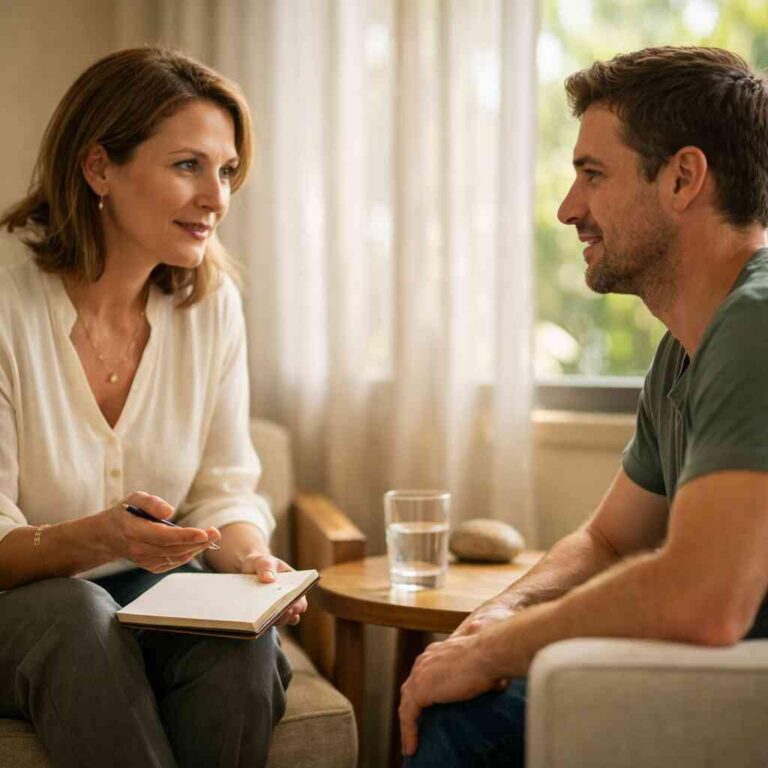
When a solo psilocybin session feels private but not necessarily safer
A solo psilocybin session can feel quieter, simpler, and more under your control. That feeling is understandable. If you are already dealing with depression, anxiety, PTSD, or addiction, privacy can sound comforting. But privacy does not automatically create safety, and that is the part most people miss.
What changes most is not the substance itself, but the support structure around it. In a guided psilocybin sessions vs. solo psilocybin sessions comparison, the biggest difference is preparation, monitoring, and follow-up. Solo use removes the person who can notice confusion, panic, or unsafe decision-making early. It also removes someone who can help you stay grounded if the experience turns intense.
What actually changes when no guide is present during the psilocybin journey
Without a guide, you are managing the entire psilocybin journey yourself. That sounds empowering until your thoughts become fragmented or your body feels unfamiliar. Psilocybin, the active compound in magic mushrooms, can shift perception, time sense, and emotional tone quickly. During those shifts, judgment can become less reliable.
Here is the part most people miss: a guide does more than sit nearby. In real psilocybin support during a session and aftercare work, the guide helps shape the room, the tone, and the pace. That matters when the experience becomes disorienting. It also matters when you are tempted to leave a safe space too soon.
One client in South Florida described planning a solo weekend because he wanted “complete privacy.” Halfway through, he felt overwhelmed by memories he had buried for years. He did not need more willpower. He needed calm presence, reassurance, and a way to slow his body down.
How psilocybin set and setting can shift in a self-directed experience
Psilocybin set and setting is not just a buzzword. It means your internal state and your environment shape the experience. A clean room can still feel wrong if you are scared, lonely, or unprepared. Likewise, a difficult moment can feel manageable if the setting is calm, familiar, and supported.
Solo sessions often start with good intentions and then drift. The music is wrong. The room is too bright. A text message lands badly. Even small disruptions can magnify under psilocybin macrodosing, especially if you are already emotionally raw. That is why guided care treats set and setting as clinical variables, not decoration.
On the projects and consults we’ve seen in Florida, the people who do best usually underestimate the environment at first. Then they realize that lighting, water, temperature, and reassurance matter more than expected. A supportive room is not a luxury. It is part of the intervention.
Why emotional intensity can feel sharper without psilocybin support during a session
Psilocybin can open emotional material quickly. That can be helpful in a therapeutic context, but it can also feel overwhelming without support. Some people experience a psilocybin mystical experience or psilocybin ego dissolution as meaningful. Others feel frightened because they have no frame for what is happening.
This is where psilocybin emotional processing becomes delicate. Alone, you may interpret discomfort as danger. Then fear builds on itself. A trained guide can help you distinguish a hard moment from a harmful one, which is a major part of psilocybin harm reduction.
We hear this from clients almost every week: the mind wants a story before the body has settled. That story can spiral fast. Guided care slows the spiral. It gives your nervous system more room to catch up.
The hidden risks of psilocybin and medication interactions when no screening is in place
The biggest hidden risk in solo use is not only the experience itself. It is what happens when psilocybin and medication interactions are ignored. Antidepressants, mood stabilizers, stimulants, and certain sleep medications can change how psilocybin feels. Some combinations may blunt effects. Others may raise concern for agitation or other complications.
That is why psilocybin screening contraindications matter before any serious consideration of treatment. A screening process can flag psychiatric history, cardiovascular issues, and medication concerns that should not be guessed about. For people on SSRIs, the question is rarely simple. It needs careful review, not internet folklore.
If you want a deeper look at screening, the psilocybin screening contraindications and medication safety process is where responsible care usually begins. Florida residents in Miami, Orlando, Tampa, and Jacksonville often search for answers only after they have already made assumptions. That is backwards. Screening should come before experimentation.
What guided psilocybin sessions are designed to hold that solo use cannot
Guided care is not about controlling your experience. It is about creating a container strong enough to hold it. In psilocybin-assisted therapy, the session is one part of a larger process that includes preparation, support, and integration. That structure often matters more than people expect.
A good guide helps you stay with the experience without being swallowed by it. They also help you make meaning afterward. That is especially important if you are seeking psilocybin treatment for depression, anxiety, PTSD, addiction, or existential distress. The session is only one chapter.
How psilocybin-assisted therapy creates a therapeutic container for psilocybin emotional processing
A psilocybin therapeutic container has boundaries. Those boundaries make vulnerability safer. You know what the room is for, who is present, and what happens if emotions rise fast. That clarity reduces uncertainty, which often lowers fear.
In practice, that means psilocybin and talk therapy work together. The guide listens, reflects, and helps you stay oriented. If grief surfaces, it can be explored instead of suppressed. If insight appears, it can be named instead of forgotten.
A recent consult in the Orlando area showed this clearly. The client had tried to “just sit with it” during a solo experience and ended up fixating on one painful memory. In guided care, that same material was approached slowly, with breath and reflection. The difference was not magic. It was structure.
Where psilocybin preparation, psilocybin screening contraindications, and psilocybin safety protocols fit in
Preparation is not a side issue. It is the foundation. Good psilocybin preparation often includes reviewing goals, discussing fears, and setting expectations for what may come up. You can read more about psilocybin preparation before a guided session if you want the practical side of that process.
Then comes screening. A responsible team checks psilocybin screening contraindications and reviews medication history carefully. They also set psilocybin safety protocols for the environment, communication, and emergency response if needed. That is standard harm reduction, not overcaution.
- Review current medications and supplements
- Discuss psychiatric history honestly
- Clarify the intended therapeutic goal
- Plan for the room, music, and supervision
- Agree on what support looks like if fear rises
Why psilocybin integration therapy matters after the session ends
The session may create the opening. Psilocybin integration therapy helps you use it. Without integration, even powerful insights can fade into memory. With integration, the experience can connect to daily life, relationships, and behavior.
This is especially relevant for people exploring psilocybin integration therapy after guided sessions. The work often includes journaling, therapy, sleep support, and realistic planning. If the session stirred up trauma, the follow-up needs to be gentle and steady. That follow-up can be the difference between insight and confusion.
Solo use rarely includes this kind of care. You may feel a strong change, then feel stranded the next day. Guided work gives you a bridge.
The role of psilocybin and talk therapy plus adjuncts like psilocybin and meditation, psilocybin and breathwork, and psilocybin and somatic therapy
Adjuncts matter because psilocybin does not live only in the mind. It also lives in the body. That is why psilocybin and meditation, psilocybin and breathwork, and psilocybin and somatic therapy are often paired with the session. These practices help regulate the nervous system and support emotional processing. Meditation can help you observe thoughts without grabbing them. Breathwork can help slow panic. Somatic therapy can help you notice tension, shaking, or numbness without judging it. Together, they support a more stable psilocybin journey. For many people, psilocybin-assisted psychotherapy with talk therapy support is the more realistic path than solo exploration. The Florida climate, the pace of life in Miami and Tampa, and the stress of modern work can all leave people carrying too much already. Support is not weakness. It is the design. 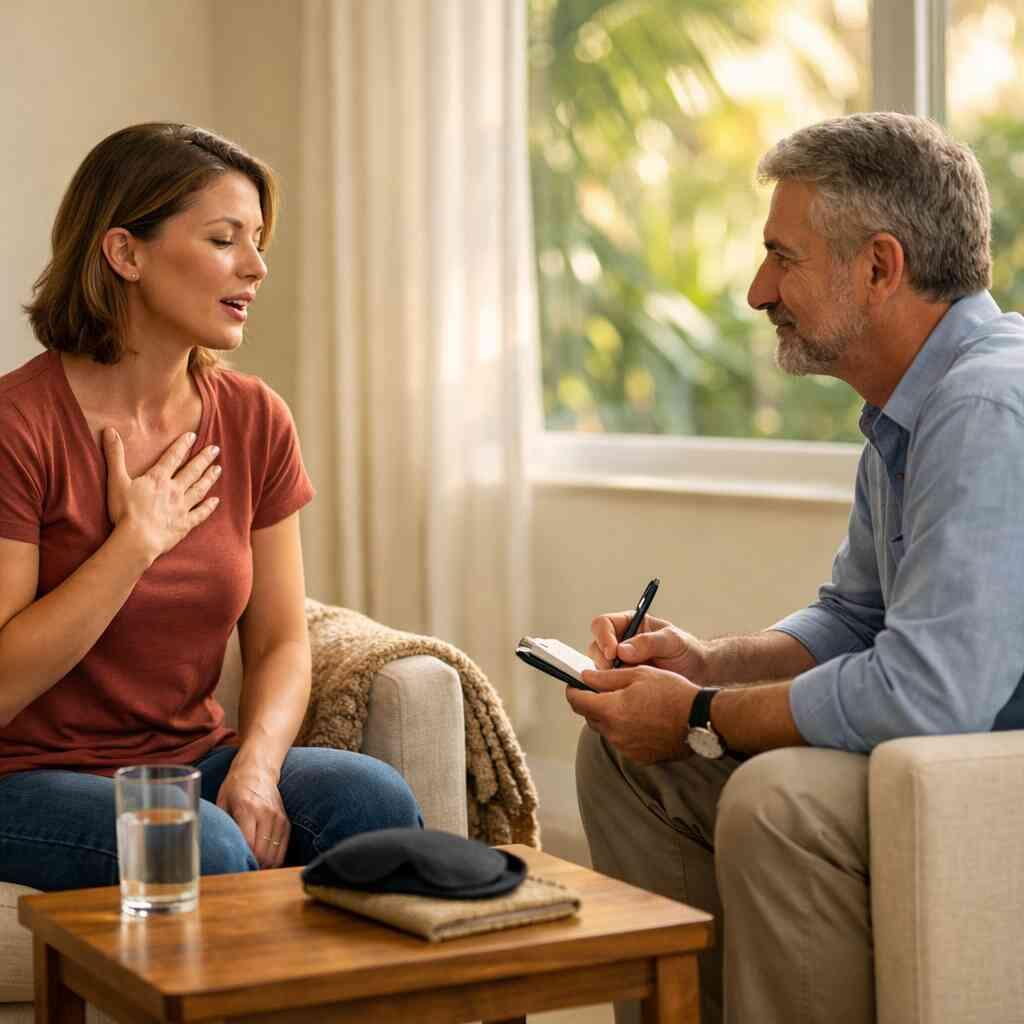
What Johns Hopkins University, Imperial College London, and FDA breakthrough therapy psilocybin research actually suggest about structure and support
Research does not support a reckless free-for-all. It supports careful structure. Johns Hopkins psilocybin research has repeatedly emphasized preparation, monitored sessions, and integration. Imperial College London has highlighted the importance of context and psychological support in psychedelic studies. The FDA has also granted breakthrough therapy psilocybin status to certain investigational programs, signaling serious therapeutic promise under controlled conditions.
That matters because the evidence base does not point toward isolated, unstructured use. It points toward supervised models. In clinical language, the session is most promising when the container is clear. That is one reason programs like COMPASS Pathways and university studies keep returning to preparation and follow-up.
The psilocybin-assisted psychotherapy with talk therapy support model reflects this reality. So does emerging work on psilocybin neuroplasticity and the psilocybin default mode network, which may help explain why supported experiences can feel psychologically catalytic. The science is still developing, but the structure is already clear.
How to choose the right path in Florida before the experience chooses for you
Florida adds another layer. Local laws, access points, and care models can shape what is realistic. If you are searching from Miami, Orlando, Tampa, or Jacksonville, you need more than curiosity. You need a plan that respects the law and your mental health history.
That is especially true if you are considering psilocybin rehab, psilocybin for depression, or help for trauma-related symptoms. The wrong setting can complicate an already difficult season. The right setting can make the process more grounded and more honest.
When guided psilocybin sessions make more sense than solo exploration for depression, anxiety, PTSD, or addiction
If you are dealing with depression that has not improved, guided care usually makes more sense than solo use. The same is true for psilocybin for anxiety, psilocybin for PTSD, and psilocybin for addiction. Those conditions can intensify self-criticism, panic, or impulsivity during an unsupervised experience.
For treatment-resistant depression, the goal is often not euphoria. It is flexibility. That is why people ask about psilocybin for depression and treatment-resistant depression instead of chasing a dramatic trip. Clinical work is slower and steadier than social media makes it look.
In practice, guided care is often wiser when:
- You have a trauma history
- You take psychiatric medication
- You feel fearful about losing control
- You are seeking meaning, not just sensation
- You need follow-up support after the session
How Florida psilocybin laws, legal psilocybin Florida, and local access in Miami, Orlando, Tampa, and Jacksonville affect your options
Florida psilocybin laws matter because legal status shapes access. As of this writing, psilocybin remains illegal under federal law, and Florida access is limited and highly regulated. That means you should be cautious with anyone claiming broad, casual availability of legal psilocybin Florida without clear legal context. The state has also seen interest in decriminalization and research-oriented conversations, but those do not equal open retail access.
If you are in Miami, Orlando, Tampa, or Jacksonville, local options may include education, screening, referrals, and clinical trial pathways rather than direct access. People often search for psilocybin therapy Orlando, psilocybin treatment Miami, psilocybin clinic Tampa, or a psilocybin therapist Jacksonville because they want something nearby. That is sensible. It is also why you should verify legality before you commit.
If you want a clearer legal overview, the Florida psilocybin laws and legal psilocybin Florida pages can help you sort fact from hype. For local access, many people also look into psilocybin treatment in Miami-Dade County or Broward and Palm Beach County options when available.
What to ask about psilocybin therapy cost Florida, insurance psilocybin, and psilocybin therapy near me before committing
Money questions are normal. They should not feel awkward. Ask directly about the cost of psilocybin therapy, what is included, and whether there are separate fees for screening, preparation, or integration. You should also ask about insurance psilocybin, because coverage remains limited and uncertain in many settings.
A smart conversation includes practical details:
- What does the total fee include?
- Are screening and integration billed separately?
- Is there support between sessions?
- Does the clinic coordinate with your current therapist?
- What happens if you are not a candidate?
People searching for psilocybin therapy near me in Florida often want immediate relief. That urgency is real. Still, cost clarity matters more than speed. If you want a broader view, psilocybin therapy cost in Florida and psilocybin treatment cost details in Florida can help you ask better questions.
Why psilocybin aftercare, psilocybin integration support, and psilocybin peer support shape what happens next
What happens after the session often determines whether the experience helps or just impresses. That is why psilocybin aftercare matters. Sleep, hydration, journaling, and scheduled check-ins can all support stability. So can psilocybin integration support and, when appropriate, psilocybin peer support.
This is where Florida geography matters again. If you are in Orlando and need follow-up, a local psilocybin integration support in Orlando resource can be useful. The same logic applies in Miami and Tampa, where people often need a nearby clinician who understands both mood symptoms and psychedelic processing.
One Tampa-area caller recently said the hard part was not the experience. It was the three days after, when the emotions kept coming back. That is a common pattern. Integration support gives those feelings a place to go.
How a careful next step changes the outcome whether you are considering psilocybin microdosing, psilocybin macrodosing, or psilocybin-assisted psychotherapy
Not every path starts with a full session. Some people ask about psilocybin microdosing because they want subtle shifts. Others are drawn to psilocybin macrodosing because they are seeking a deeper emotional reset. The problem is that both can be misunderstood when approached without context.
Microdosing is often marketed as harmless, but evidence remains mixed and dosing practices vary widely. Macrodosing can feel profound, but it also increases the need for safety and support. Psilocybin-assisted psychotherapy sits between those extremes by tying the experience to therapeutic goals, screening, and integration. That makes the process more deliberate.
Before you decide, ask one serious question: what support will exist before, during, and after the experience? If the answer is vague, keep looking. If you want a thoughtful place to start, Psilocybin Florida can help you sort through eligibility, screening, and next steps without pressure.
Frequently Asked Questions
Question: What is psilocybin therapy like at Psilocybin Florida, and how do guided psilocybin sessions support safer psilocybin emotional processing than solo psilocybin sessions?
Answer: Psilocybin therapy is designed to be a structured, supportive process rather than an unstructured experience. At Psilocybin Florida, guided psilocybin sessions are approached with preparation, supervision, and integration in mind so that the psilocybin journey has a therapeutic container. This matters because psilocybin can intensify emotions, shift perception, and make judgment feel less reliable, especially without psilocybin support during a session. Guided care helps with psilocybin set and setting, emotional grounding, and psilocybin harm reduction, while solo psilocybin sessions remove that layer of support. If you are exploring psilocybin-assisted therapy for depression, anxiety, PTSD, or addiction, a guided model is typically the more thoughtful and safer place to start.
Question: Why does The Difference Between Guided and Solo Psilocybin Sessions matter so much for people considering psilocybin for depression, psilocybin for anxiety, or psilocybin for PTSD?
Answer: The Difference Between Guided and Solo Psilocybin Sessions matters because the experience is shaped not only by the substance, but by the support structure around it. For people looking into psilocybin for depression, psilocybin for anxiety, or psilocybin for PTSD, guided care can help reduce confusion, panic, and unsafe decision-making during intense moments. A guide can help you stay oriented, review goals, and support psilocybin emotional processing if difficult memories or feelings arise. At Psilocybin Florida, the focus is on psilocybin-assisted psychotherapy, careful psilocybin preparation, and psilocybin aftercare so the experience is not left unsupported. That kind of structure is especially important for people who are seeking psilocybin treatment with intention rather than simply chasing a strong psilocybin mystical experience or psilocybin ego dissolution.
Question: How does Psilocybin Florida handle psilocybin screening contraindications and psilocybin and medication interactions before guided psilocybin sessions?
Answer: Careful screening is one of the most important steps before any psilocybin therapy plan. Psilocybin Florida emphasizes psilocybin screening contraindications because medication history, mental health history, and overall health can all affect whether psilocybin-assisted therapy is appropriate. Psilocybin and medication interactions may be especially relevant for people taking antidepressants, mood stabilizers, stimulants, or sleep medications, so this should never be guessed at or handled casually. A responsible screening process helps determine whether someone may be a fit for guided psilocybin sessions, psilocybin microdosing discussions, or referral to another type of support. This is part of safe, compassionate psychedelic therapy Florida residents can evaluate with more clarity, especially if they are comparing options for psilocybin therapy near me or seeking psilocybin treatment Miami, psilocybin therapy Orlando, Tampa psychedelic therapy, or Jacksonville psilocybin clinic resources.
Question: What role do psilocybin preparation, psilocybin integration therapy, and psilocybin aftercare play after a guided session?
Answer: Psilocybin preparation, psilocybin integration therapy, and psilocybin aftercare are essential parts of the process because the session itself is only one piece of the healing pathway. Preparation helps clarify goals, set expectations, and create a stable psilocybin set and setting before the experience begins. Integration therapy then helps you make sense of what came up, connect insights to daily life, and avoid feeling stranded after the session ends. Psilocybin aftercare can include grounding practices, journaling, rest, and follow-up support to help the experience settle in a healthy way. At Psilocybin Florida, this broader structure is part of what makes psilocybin-assisted therapy more supportive than solo exploration, especially for people seeking psilocybin for treatment-resistant depression, psilocybin for trauma survivors, or psilocybin integration support from a compassionate psilocybin integration therapist Florida residents can trust.
Question: How does Psilocybin Florida approach legal psilocybin Florida questions, psilocybin clinical trials Florida, and access for people searching for psilocybin therapy near me?
Answer: Psilocybin Florida encourages people to approach legal psilocybin Florida questions carefully, because laws and access conditions can be complex and may change over time. As a general matter, psilocybin remains illegal under federal law, and Florida access is limited and highly regulated, so it is important to verify any claim about availability before moving forward. For people searching psilocybin therapy near me, that often means looking at education, screening, integration support, or psilocybin clinical trials Florida rather than assuming direct access. Psilocybin Florida can help people think through realistic next steps in a way that is informed, compassionate, and grounded in safety. Whether someone is asking about psilocybin rehab, psilocybin holistic therapy, psilocybin-assisted psychotherapy, or local searches like Orlando psilocybin therapy, Miami magic mushroom treatment, or psilocybin clinic Tampa, the priority should always be legal clarity, thoughtful screening, and supportive care.