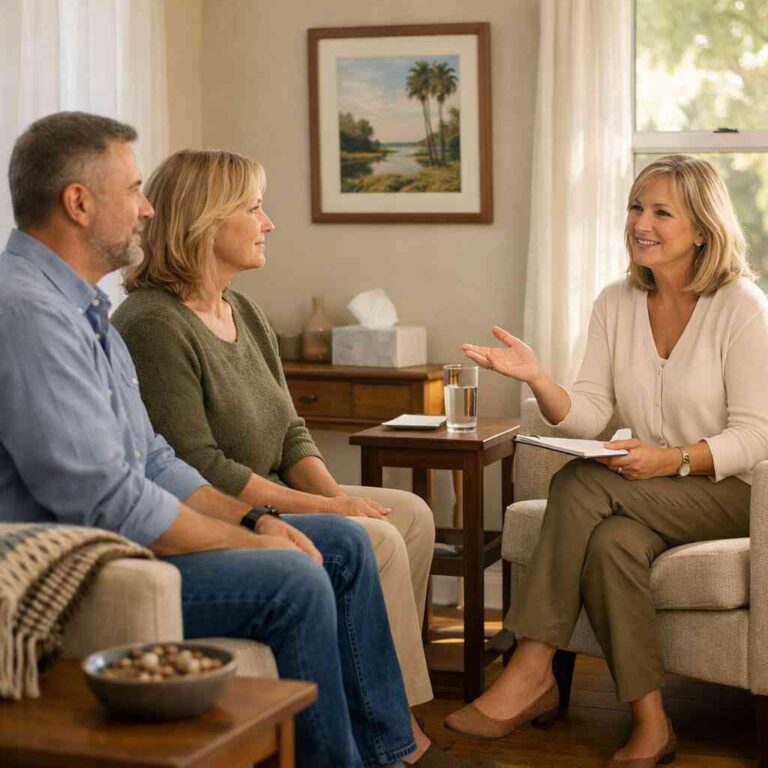
When family tension is the symptom and not the problem
If you are reading this because home feels tense, heavy, or fragile, that feeling makes sense. Family conflict rarely starts with the loud argument. More often, it begins with depression, anxiety, trauma, addiction, or years of unspoken hurt. That is where psilocybin family healing in Florida may become relevant, because the real issue is often deeper than the behavior everyone sees.
Why a psilocybin journey can shift patterns that talk alone has not reached
Talk therapy helps many families, and it still matters. Yet some patterns stay locked in place for years. Psilocybin therapy, when used with proper clinical screening and support, may help loosen rigid emotional loops that ordinary conversation cannot reach. That does not mean it replaces therapy. It means it may create enough openness for therapy to land differently.
Here is the part most families miss. A psilocybin journey is not just about what happens during the session. It can change how a person relates to fear, shame, and defensiveness afterward. A parent may hear a child differently. A partner may pause before reacting. That small shift can change the emotional weather at home.
How trauma, addiction, depression, and anxiety ripple through one household at a time
A family is a system, not a set of isolated people. If one person is carrying psilocybin for trauma survivors, the whole home often reorganizes around that pain. If someone is searching for psilocybin for depression, psilocybin for anxiety, or psilocybin for addiction, the impact often shows up in sleep, money, trust, and daily routines.
We hear this from families almost every week. One person becomes the “problem,” but the whole household is working around that person’s struggle. A mother in Palm Beach may be exhausted from managing everyone’s moods. A father in Tampa may look fine at work and fall apart at home. A teenager in Orlando may stop talking altogether. The pain spreads quietly.
What family healing can look like in Florida when everyone is carrying a different story
Family healing does not look neat. It looks like one person asking a harder question. It looks like a sibling staying in the room longer than usual. It looks like fewer assumptions and more repair. In Florida, that process often plays out while families are juggling school schedules, commute stress, and the emotional drain of hurricane-season readiness.
One client in Broward described the feeling as “living in separate apartments inside the same house.” That image is common. Florida families in Miami, Orlando, Tampa, and Jacksonville often come from different cultural expectations, different generations, and different beliefs about mental health. Psilocybin-assisted therapy can give each person a better way to name what they feel, even before they agree on what to do next.
Why psilocybin therapy is not about changing one person and hoping the family follows
Psilocybin therapy is not a rescue plan for a single person. It is a support structure for a broader system. If one family member changes, the rest may resist at first. That is normal. Systems push back when old roles stop working.
That is why psilocybin-assisted family recovery support in Florida should always be paired with communication, boundaries, and aftercare. The goal is not instant harmony. The goal is a more honest family pattern. Sometimes that begins with one guided session, followed by difficult but useful conversations at home.
The quiet mechanics of healing that psilocybin may open up
Psilocybin does not heal by magic alone. It appears to change how the brain organizes attention, emotion, and self-talk. That matters when families are stuck in old scripts. It also matters when shame has become the default language in the house. The science is still developing, but the direction is promising and specific.
How psilocybin neuroplasticity can support new responses in old family conflicts
Researchers often discuss psilocybin neuroplasticity, meaning the brain’s ability to form new connections. That matters because family conflict usually runs on habit. A tone of voice, a facial expression, or one missed text can trigger a whole cascade. Psilocybin therapy may help people respond with more flexibility instead of reflex.
This is not the same as becoming cheerful. It is more grounded than that. A person may notice the knot in their chest before the outburst arrives. That extra pause can change the whole exchange. Over time, the family begins to practice a different rhythm.
Why the default mode network matters when shame, blame, and fear keep repeating
The default mode network is a brain system linked to self-referential thinking. In plain language, it helps create the story of “me.” When that story is dominated by shame or fear, family conflict gets personal fast. Psilocybin appears to soften some of that rigid self-story, which may help people see themselves and each other with less panic.
This is one reason psilocybin set and setting matters so much. A supportive environment can reduce fear and increase reflection. In a family context, that can mean less blame and more curiosity. That shift sounds small. It is not.
What Johns Hopkins psilocybin research and Imperial College London suggest about emotional flexibility
Johns Hopkins psilocybin research has repeatedly linked the compound with meaningful changes in mood and perspective, especially when paired with preparation and integration. Imperial College London has also published work showing changes in emotional processing and brain connectivity after psilocybin exposure. Together, these studies suggest that psilocybin may help people become more emotionally flexible.
That flexibility matters for families dealing with psilocybin for PTSD, [psilocybin for generalized anxiety disorder], and [psilocybin for existential anxiety]. A person who can tolerate hard feelings without immediately shutting down is often easier to reach. That does not solve everything. It does create room for new conversations.
How psilocybin-assisted therapy fits with talk therapy, somatic therapy, meditation, and breathwork
Psilocybin-assisted therapy works best as part of a larger care plan. It often fits alongside talk therapy, somatic therapy, meditation, and breathwork. Each method does something different. Talk therapy helps organize meaning. Somatic therapy helps the body release tension. Meditation helps attention. Breathwork helps regulate stress. 
- Talk therapy supports insight and language.
- Somatic therapy helps you notice body-based stress.
- Meditation supports awareness without immediate reaction.
- Breathwork can reduce overwhelm and restore steadiness. This mix matters for families because conflict is both emotional and physical. Tight shoulders, clenched jaws, and shallow breathing often show up before words do. Psilocybin-assisted psychotherapy gives those therapies a wider opening.
Why psilocybin preparation, psilocybin set and setting, and psilocybin integration therapy shape the family ripple effect
Preparation changes the quality of the experience. Set and setting change how safe the experience feels. Integration changes what survives after the session ends. Those three pieces are not extras. They are the structure. Without them, psilocybin can become confusing instead of useful.
One Jacksonville family told us that the real shift happened after the session, not during it. The person who participated was better able to say, “I see how my silence hurt you.” That sentence came from careful preparation, a calm environment, and post-session integration. psilocybin integration therapy is where insight turns into practice.
When Florida families need a plan that is safer than hope alone
Hope matters. So does caution. Families in Florida often start researching psilocybin after months of pain, and that urgency can make every option seem urgent and available. It is wise to slow down here. Safety, legality, and fit all matter before anyone moves forward.
What psilocybin screening contraindications and medication interactions mean for families weighing this option
Screening is not a formality. It helps identify risks that can make psilocybin unsafe or inappropriate. Some psychiatric histories, cardiovascular concerns, and medication combinations require serious review. This is especially true with psilocybin and medication interactions.
Families often ask about [psilocybin and SSRIs], and the answer is not simple. Some people may need supervised tapering decisions made by licensed clinicians, while others may not be good candidates at all. That is why [psilocybin screening contraindications] matter. If a service skips this part, be cautious. Safety is the foundation, not the final detail.
How Florida psilocybin laws, legal psilocybin Florida, and psilocybin clinical trials Florida shape what is and is not available
Florida psilocybin laws remain important to understand before anyone plans care. Psilocybin is still generally illegal outside approved research or narrow legal exceptions, and families should verify current rules carefully. The phrase legal psilocybin Florida should always be read with caution, because law changes slowly and sometimes unevenly. Do not rely on social media for legal guidance.
For many people, psilocybin clinical trials Florida may be the clearest lawful pathway to access. Trials are structured, screened, and monitored. They are not a casual wellness offering. Florida’s Right to Try framework and broader federal research rules can matter here, but families should confirm current eligibility with qualified professionals and legal resources before assuming access.
Where psilocybin therapy Miami, psilocybin therapy Orlando, psilocybin clinic Tampa, and psilocybin therapist Jacksonville fit into the search for support
Families often search by city because location affects access, scheduling, and follow-up care. You may see terms like psilocybin therapy Miami, psilocybin therapy Orlando, psilocybin clinic Tampa, and psilocybin therapist Jacksonville. The location matters because integration support works best when it is reachable.
Florida families also search from West Palm Beach, Fort Lauderdale, Sarasota, Naples, and Boca Raton. That is practical. If a provider is too far away, aftercare often slips. When you are comparing options, ask about access, transport, and how family members can be included.
Why psilocybin aftercare, psilocybin peer support, and psilocybin integration support matter after a guided session
The hours and days after a guided session are not an afterthought. They are where meaning settles. psilocybin aftercare helps reduce confusion and keeps fragile insights from fading. [psilocybin peer support] can also help a person feel less isolated when emotions remain open.
This is where psilocybin integration support after guided sessions becomes essential. Families often want the breakthrough, but the rebuild happens later. Good aftercare can include journaling, quiet time, family check-ins, and boundaries around hard conversations. It should never feel rushed.
What to ask about eligibility, pricing, insurance, and family-centered psilocybin integration therapist Florida care before moving forward
Ask direct questions. You deserve straight answers. Start with eligibility, screening, and the model of care. Then ask about [cost of psilocybin therapy], [insurance psilocybin], and whether the provider offers family-centered psilocybin integration therapy in Florida.
Use this checklist:
- Is screening done before any session planning?
- What medications are reviewed for safety?
- How is family involvement handled?
- What does preparation include?
- What follow-up is offered after the session?
- Are there clear policies on legality and trial eligibility?
If you are comparing [psilocybin therapy near me], do not choose on convenience alone. Choose the team that explains risks, boundaries, and support plainly. Psilocybin treatment should make your next conversation calmer, not more confusing. Start with one careful call, and ask about the screening process before anything else.
Frequently Asked Questions
Question: How does Psilocybin Florida support family healing through psilocybin therapy and psilocybin-assisted therapy?
Answer: Psilocybin Florida approaches family healing by recognizing that conflict at home is often a sign of deeper stress, such as trauma, depression, anxiety, addiction, or years of unspoken pain. Through psilocybin therapy and psilocybin-assisted psychotherapy, the goal is not to force instant harmony, but to create more emotional flexibility, healthier communication, and space for reflection. When used with careful psilocybin preparation, supportive psilocybin set and setting, and thoughtful psilocybin aftercare, a guided psilocybin session may help a person become less reactive and more open to repair. That can matter a great deal in family systems healing, where one person’s stress often affects everyone in the household. Psilocybin Florida emphasizes trauma-informed care, psilocybin integration therapy, and a compassionate process that respects each family’s pace and needs.
Question: What should families know before exploring How Psilocybin Florida Supports Family Healing in 2026?
Answer: Families should know that psilocybin treatment is not a quick fix and should never be approached casually. The most important first step is screening, because psilocybin screening contraindications and psilocybin and medication interactions can make this kind of care unsafe for some people. Psilocybin Florida encourages families to ask directly about eligibility, preparation, and integration before moving forward. It is also important to understand that legal psilocybin Florida rules remain limited and can change, so any path forward should be based on current legal guidance and, when appropriate, psilocybin clinical trials Florida rather than assumptions. A careful provider should also discuss psilocybin and SSRIs, mental health history, and whether the person is better suited for support through psilocybin therapy near me options, psilocybin integration support, or a clinical trial setting. That kind of clarity builds trust and protects families from unnecessary risk.
Question: Can psilocybin therapy help with psilocybin for depression, psilocybin for anxiety, or psilocybin for PTSD in a family context?
Answer: Psilocybin therapy is being studied for conditions such as psilocybin for depression, psilocybin for anxiety, psilocybin for PTSD, and psilocybin for addiction, but it is important to be careful and evidence-based in how those possibilities are discussed. For families, the value is often not just in symptom relief, but in how a person’s relationship to fear, shame, and defensiveness may shift over time. Research around psilocybin neuroplasticity, psilocybin default mode network changes, and the role of psilocybin mystical experience suggests that some people may become more able to reflect, pause, and connect differently after a guided experience. That can support family-centered psilocybin integration therapist Florida care, especially when paired with psilocybin and talk therapy, psilocybin and somatic therapy, psilocybin and meditation, and psilocybin and breathwork. Psilocybin Florida keeps the focus on support, integration, and realistic expectations rather than promises, which is essential for trust.
Question: What does psilocybin preparation, psilocybin set and setting, and psilocybin aftercare look like for families in Florida?
Answer: Good psilocybin preparation begins long before any guided psilocybin sessions. It includes screening, education, intention-setting, and a clear conversation about what the person and their family are hoping to understand or change. Psilocybin set and setting are especially important because a safe, calm environment can support reflection and reduce overwhelm. After the session, psilocybin aftercare and psilocybin integration support help turn insight into day-to-day change through journaling, family check-ins, continued therapy, and practical communication tools. For families, this may also include psilocybin peer support or structured psilocybin integration therapy so that the experience does not remain isolated to one person. Psilocybin Florida’s compassionate approach is built around helping people use the experience responsibly and thoughtfully, not rushing them through the process.
Question: Where can families find psilocybin therapy Orlando, psilocybin treatment Miami, psilocybin clinic Tampa, or psilocybin therapist Jacksonville support?
Answer: Families often begin their search with location because follow-up care and access matter. Psilocybin Florida serves people looking for psilocybin therapy Orlando, psilocybin treatment Miami, psilocybin clinic Tampa, psilocybin therapist Jacksonville, as well as support in West Palm Beach, Fort Lauderdale, Sarasota, Naples, and Boca Raton. The most important thing is not simply finding the closest option, but finding a Florida psychedelic therapy center that takes screening, safety, legality, and integration seriously. Whether someone is comparing psilocybin therapy near me options or trying to understand the difference between psilocybin microdosing, psilocybin macrodosing, and guided psilocybin sessions, the right provider should explain the process clearly and compassionately. Psilocybin Florida’s role is to offer a supportive path that respects both the science and the emotional reality of family healing.