Guide to Psilocybin Florida Facilitator Training for 2026
Awakening the Sunshine State Through Psilocybin Facilitation
The evolving legal landscape of psilocybin therapy in Florida
Florida lawmakers have begun drafting nuanced legislation that distinguishes therapeutic psilocybin use from recreational consumption. These early frameworks prioritize licensed settings, strict screening, and trauma-informed protocols, making compliance training indispensable. Future facilitators study zoning requirements, patient eligibility criteria, and data reporting obligations to remain fully aligned with state mandates. Because regulations continue shifting, our curriculum includes regular policy briefings so graduates can quickly adapt. Staying ahead of legal change safeguards clients and reinforces public trust in magic mushroom guide course outcomes. In parallel, several county health boards have launched pilot programs monitoring psilocybin treatment for depression, anxiety, and PTSD. These initiatives attract bipartisan support because they promise measurable relief for residents burdened by opioid misuse and veteran suicidality. Facilitators who understand local statutes can collaborate with hospitals, veteran centers, and integrative clinics to expand access responsibly. Graduates also learn to present outcome data to policymakers, strengthening arguments for broader legal protections. Mastery of regulatory language ultimately enables practitioners to advocate for humane, science-driven policies.
Magic mushrooms for mental health and rising client demand
Across the state, demand for magic mushrooms for mental health now outpaces the supply of certified guides. Word of mouth travels quickly when families witness remission of treatment-resistant depression after supervised ceremonies. Social media amplifies testimonials, and the mainstream press features stories on neuroplasticity science and psilocybin’s rapid-acting benefits. Consequently, clinics report waitlists, pushing them to recruit skilled facilitators who combine clinical rigor with compassionate presence. Our program answers that call by teaching therapeutic set and setting coaching, harm reduction best practices for psilocybin, and mindfulness-based trip sitting techniques. Demographic analyses reveal especially strong interest among veterans, first responders, and professionals facing chronic stress. Many have cycled through conventional pharmacology with limited relief, prompting exploration of psilocybin microdosing in Florida guidelines. Facilitators trained in anxiety relief protocols taught in Florida gain credibility by demonstrating fluency in peer-reviewed outcomes. As client diversity widens, guides must adapt language, cultural references, and spiritual frameworks to honor individual belief systems. The curriculum therefore emphasizes inclusive dialogue and non-dogmatic support, ensuring every participant feels respected and safe.
Aligning personal calling with professional opportunity in psychedelic care
For many applicants, pursuing psilocybin treatment facilitator skills is both a career pivot and a soulful mission. Trainees often arrive after transformative personal journeys, eager to translate inner growth into public service. Our admissions panel values lived experience while insisting on robust academic foundations in psychology, counseling, or nursing. Early mentorship sessions help candidates articulate ethical commitments, clarifying how they will balance fiduciary duty with spiritual humility. Through reflective writing, peer dialogue, and supervision, students learn to hold space without imposing narratives. Economic forecasts suggest psychedelic therapy mentorship program graduates will encounter abundant employment across Florida’s expanding clinic network. Partnerships with statewide clinic network for practicum placements () ensure each learner gains hands-on exposure in high-quality settings. Practicum evaluations focus on empathy, risk assessment, and cultural competence, reinforcing a stewardship mindset rather than transactional care. Graduates emerge prepared to steward community healing circles, private practice sessions, and multidisciplinary research collaborations. Aligning vocation with the psychedelic renaissance thus offers both personal fulfillment and sustainable livelihood.
Curriculum Architecture for the Contemporary Psilocybin Facilitator
Mycology basics and clinical psilocybin protocol education
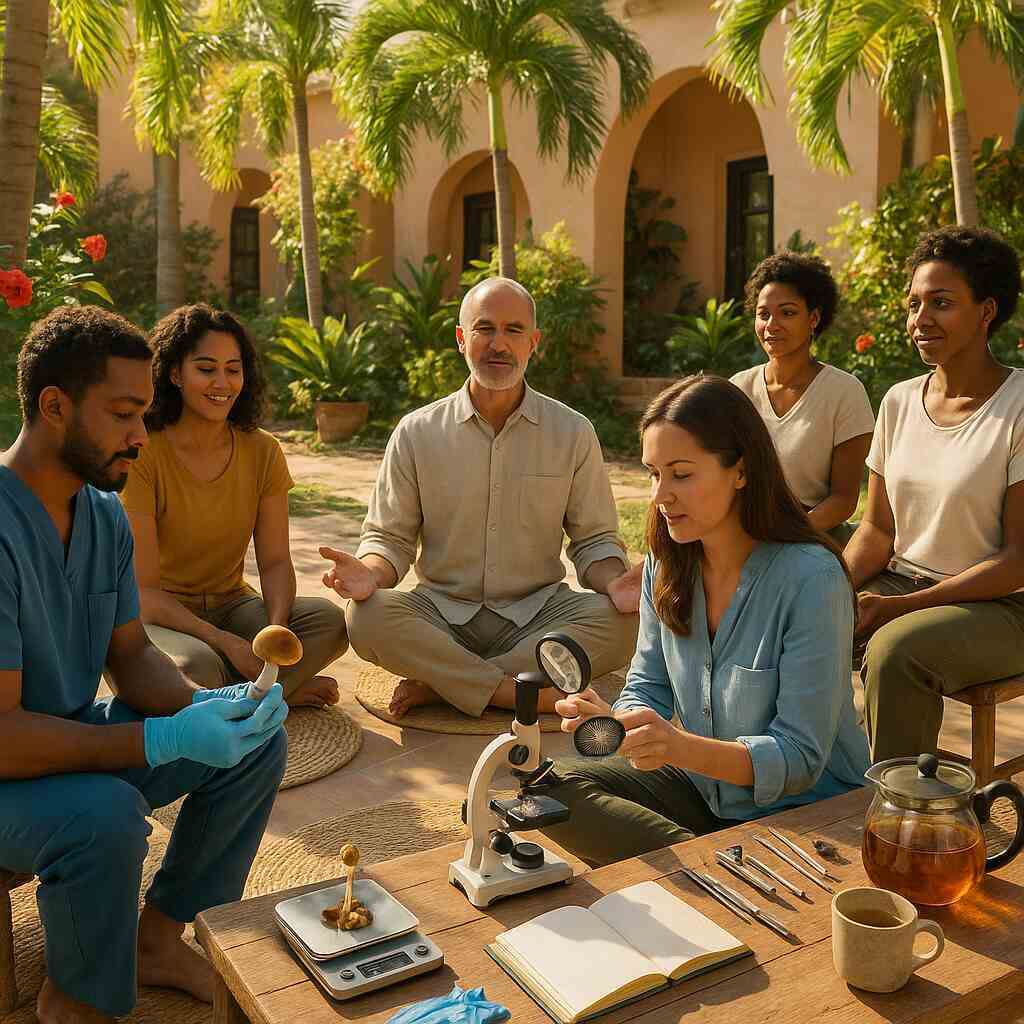
Every psilocybin facilitator training Florida cohort begins with rigorous mycology basics for facilitators, grounding students in mushroom taxonomy and safety. Trainees examine spore prints, fruiting body morphology, and habitat clues so they can confidently recognize active Psilocybe species during field practicums. Classroom microscopes illuminate subtle differences between benign look-alikes and therapeutically valuable strains, preventing accidental misidentification. The curriculum then bridges laboratory science with clinical psilocybin protocol education, showing how mycological precision supports dosing accuracy and risk mitigation. By the end of this module, learners can translate botanical insight into reliable session planning, reinforcing public trust in facilitator competence.
Beyond taxonomy, the magic mushroom guide course introduces the pharmacology of psilocybin for curriculum science, illustrating conversion pathways from psilocybin to psilocin inside the body. Interactive labs double as a psilocybin dosing strategies workshop, letting students model individualized regimens that follow psilocybin microdosing in Florida guidelines. Faculty emphasize integrative medicine and psilocybin therapy, aligning the mushroom-assisted therapy apprenticeship with nutrition, breathwork, and somatic practices that amplify neuroplastic outcomes. A seasoned mentor oversees each psychedelic therapy mentorship program exercise, ensuring proper sterile technique, documentation, and ethical sourcing. Graduates leave with foundational psilocybin treatment facilitator skills that harmonize hard science and compassionate care.
Trauma-informed psychedelic facilitation and harm reduction best practices
Trauma-informed psychedelic facilitation stands at the heart of our harm reduction best practices for psilocybin. Students learn to detect dissociative cues, freeze responses, and hidden triggers before, during, and after altered-state work. Psychospiritual crisis management training equips them with verbal de-escalation scripts, somatic grounding tools, and clear referral pathways for complex presentations. Ethical psychedelic stewardship requires honoring indigenous wisdom integration in therapy, so elders and cultural historians lecture on respectful language, ceremony structure, and reciprocity. This multidimensional approach nurtures facilitators who can hold turbulent emotion without pathologizing or appropriating sacred traditions.
Client preparation for magic mushroom sessions extends the safety net further by rehearsing set and setting visualizations, informed consent dialogues, and realistic expectation mapping. Faculty continually reference the legal landscape of psilocybin in Florida, underscoring documentation protocols that satisfy emerging state guidelines for psilocybin therapy in Florida certification. Special focus days explore veteran mental health support with psilocybin and addiction recovery with magic mushrooms curriculum, encouraging trauma-sensitive group dynamics. Learners practice co-facilitation drills that mirror real clinic scenarios, reinforcing accountability and peer feedback. Such depth readies graduates to navigate any therapeutic storm with steadiness and grace.
Mindfulness-based trip sitting techniques and therapeutic set and setting coaching
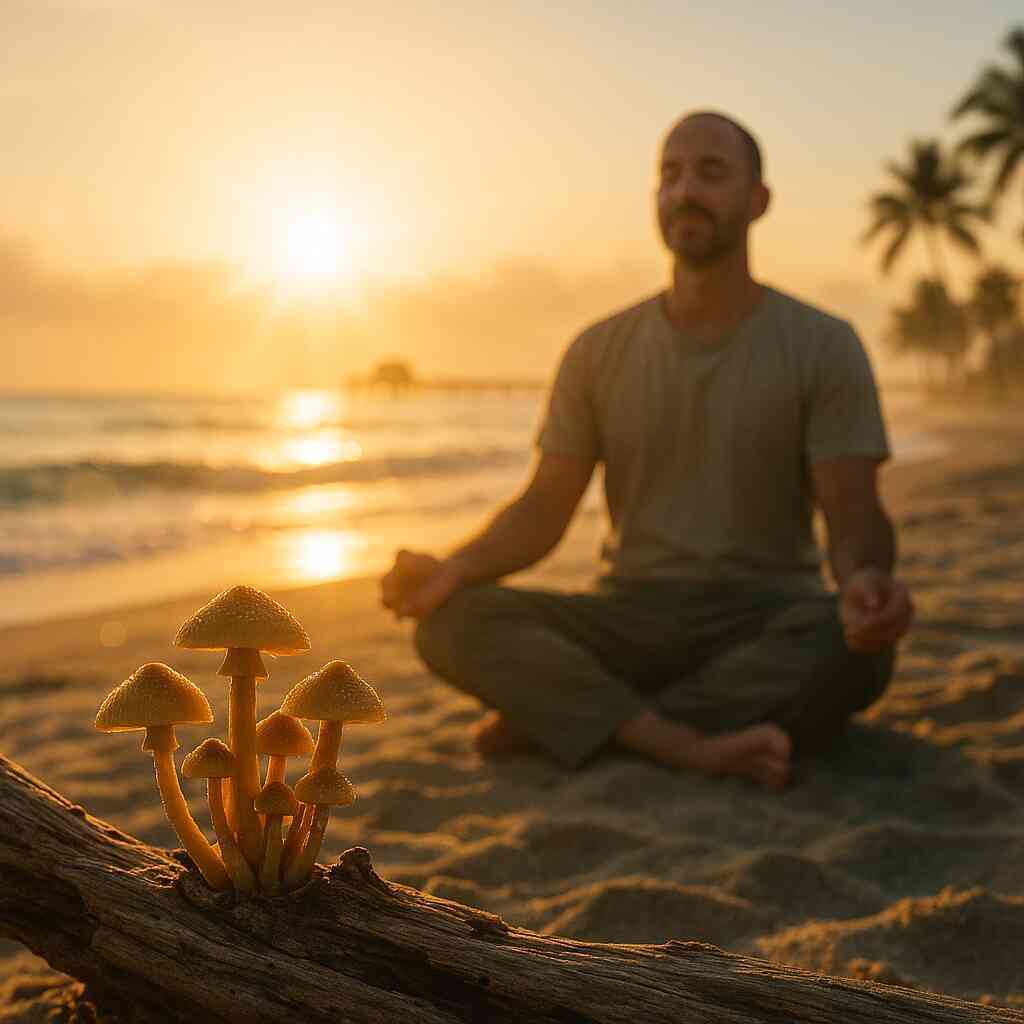
Mindfulness-based trip sitting techniques train facilitators to anchor attention in breath, sensation, and spacious awareness regardless of visionary intensity. Through silence retreats and entheogenic sitters course Florida simulations, students cultivate non-reactive presence that helps participants ride emotional waves safely. Faculty weave therapeutic set and setting coaching into each exercise, inviting learners to design music playlists, lighting schemes, and intention rituals that match client archetypes. Case vignettes reveal how advanced set and setting coaching insights can shorten challenging passages while maximizing insight. Continuous feedback loops sharpen attunement skills essential for transformative journeys.
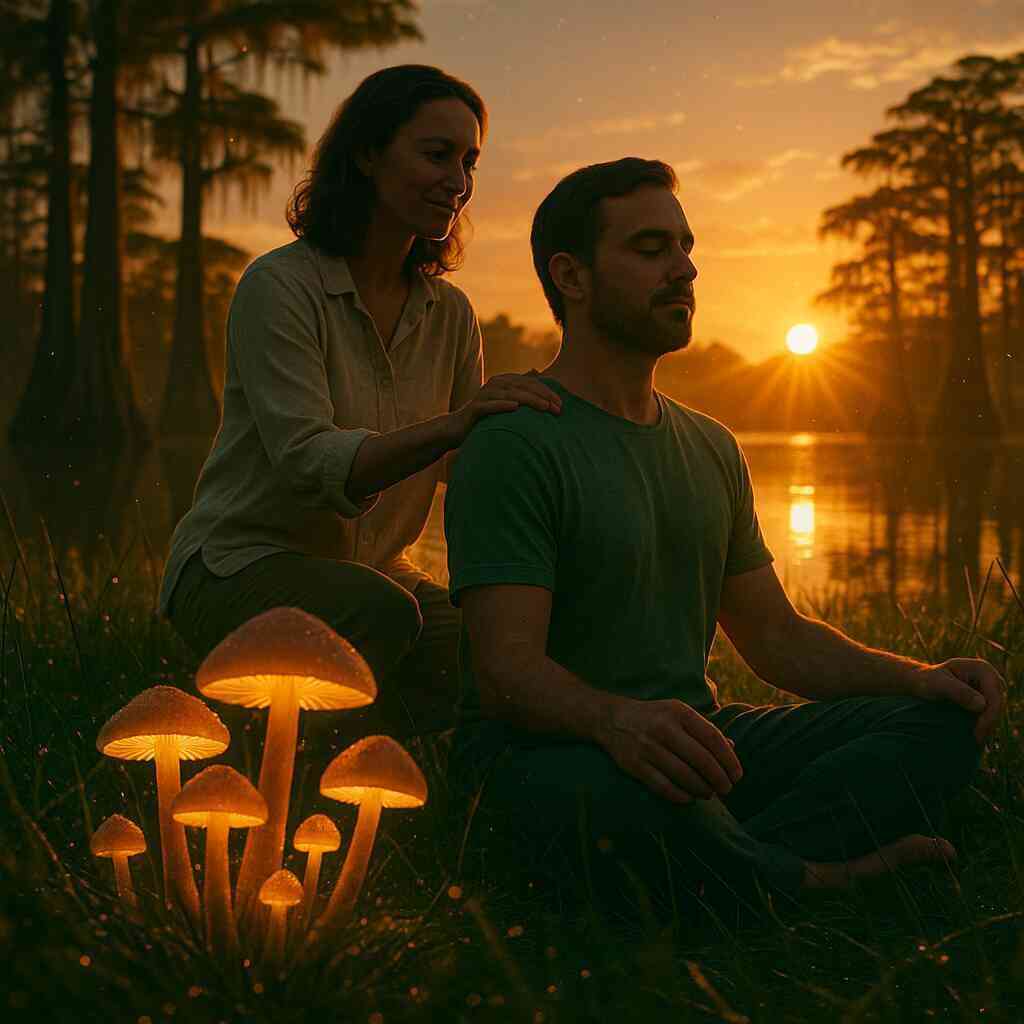
Group ceremony facilitation skills evolve naturally from solo sitting drills, emphasizing relational mindfulness, conflict mediation, and ritual choreography. Facilitator self-care techniques occupy equal time, teaching yoga nidra, journaling, and supervised peer debriefs that stave off compassion fatigue. Community-supported healing circles facilitation broadens impact by empowering alumni to host sliding-scale integration nights in rural counties. Holistic mental wellness coaching with psilocybin blends nutrition counseling, movement therapy, and breathwork, creating wraparound support beyond the pharmacological event. Finally, continuing education in psychedelic health requirements are mapped so graduates remain current with evolving modalities.
Neuroplasticity science and evidence-based psilocybin treatment for depression
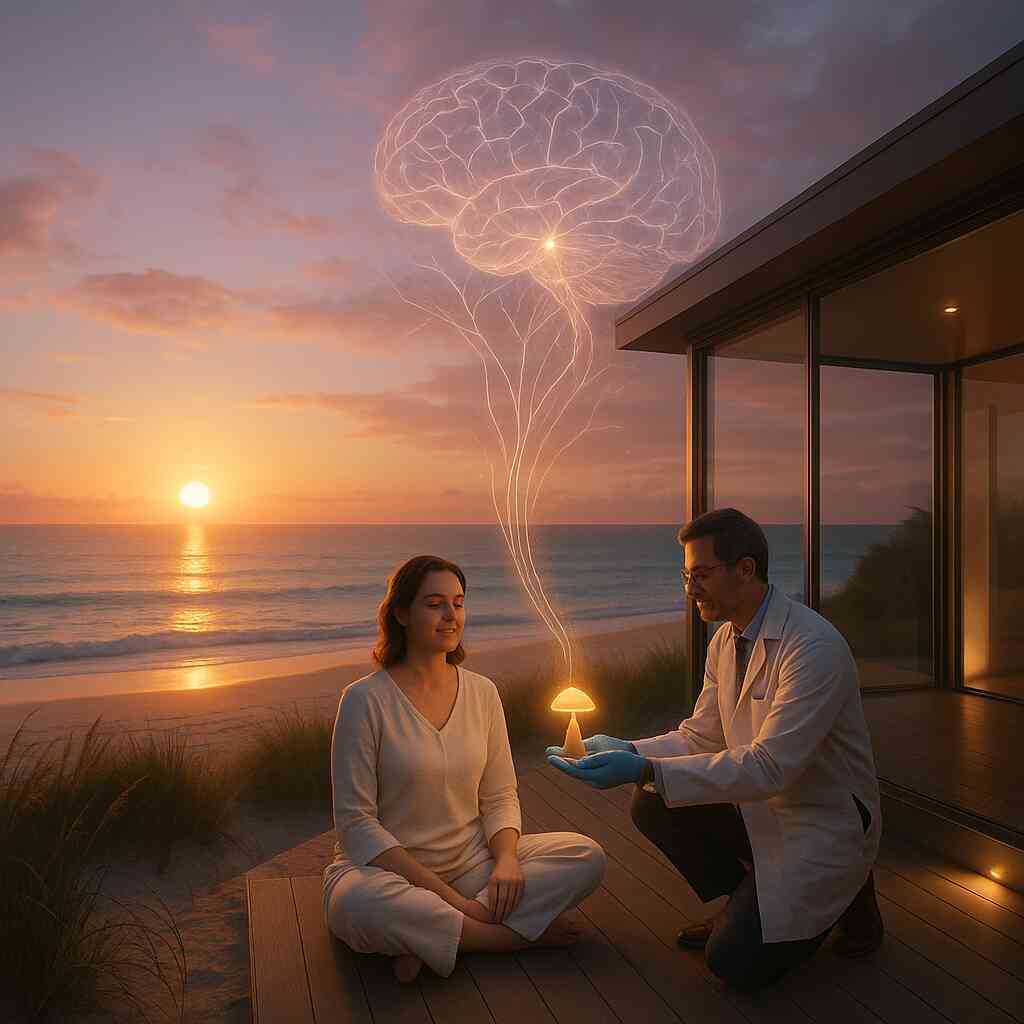
The neuroplasticity and psilocybin science module unpacks synaptogenesis, default-mode network modulation, and inflammatory cytokine reduction with therapist-friendly language. Learners compare animal studies to human neuroimaging, then correlate findings with subjective reports of cognitive flexibility. Faculty highlight key takeaways from evidence-based psilocybin for depression curriculum, ensuring trainees can defend treatment plans to skeptical insurers and clinicians. Supplemental readings provide neuroplasticity science updates for 2026 mentors alongside the psilocin metabolic pathways lesson, strengthening biochemical fluency. Mastery of these metrics sharpens outcome tracking, allowing facilitators to refine protocols iteratively.
Integrative medicine and psilocybin therapy discussions extend into complementary TMS therapies overview for facilitators and ketamine-assisted therapy comparison modules. Students learn to position psilocybin within a stepped-care framework, advocating collaboration rather than competition with allied treatments. Role-play negotiations simulate multidisciplinary rounds where facilitators share clinical psilocybin protocol education data with neurologists, psychiatrists, and nutritionists. Emphasis on translational science assures that evidence remains actionable, not abstract. Such cross-pollination accelerates mainstream adoption while preserving psychedelic intentionality.
Post-session integration counseling certification and community-supported healing circles
Post-session integration counseling certification synthesizes motivational interviewing, somatic tracking, and creative expression into a cohesive model. Trainees practice integration strategies beyond talk therapy by guiding breath-led movement, nature immersion, and vision board creation. Community-supported healing circles facilitation labs encourage shared storytelling that normalizes mystical experiences and reduces isolation. The psychedelic therapy mentorship program staff review anonymized transcripts, offering targeted feedback that deepens reflective listening. Graduates therefore translate epiphanies into sustainable life changes rather than fleeting euphoria.
Long-term facilitator self-care techniques resurface here, framing personal wellbeing as ethical duty to clients. The licensing pathway for psychedelic therapists road-map clarifies supervision hours, jurisprudence exams, and liability coverage, helping students navigate bureaucracy confidently. Continuing education in psychedelic health options, such as advanced microdosing electives and multicultural ritual seminars, keep skills sharp post-graduation. Finally, psilocybin treatment facilitator skills are assessed through capstone practicums where learners co-lead public integration forums under expert observation. Successful candidates earn dual badges symbolizing competence and community stewardship.
From Certification to Stewardship in Florida’s Psychedelic Future
Facilitator self-care techniques and sustainable practice
Graduates quickly discover that psilocybin facilitator training Florida is only the beginning; durability depends on disciplined self-care. Daily meditation, breathwork, and reflective journaling anchor emotional equilibrium before every session. Faculty in our psychedelic therapy mentorship program model boundaries, showing how strict scheduling shields family time and creative renewal. Regular nature immersion further recalibrates nervous systems strained by empathic resonance. By prioritizing personal wellness first, facilitators sustain clear presence for clients seeking transformative relief.
Nevertheless, altruism alone cannot inoculate guides against burnout. Structured peer supervision groups weave mindfulness-based trip sitting techniques with psychospiritual crisis management training, allowing real-time debriefs after demanding ceremonies. Participants share somatic cues, reinforcing harm reduction best practices for psilocybin learned during clinical psilocybin protocol education. Routine health metrics, including sleep quality and heart-rate variability, track subtle stress accumulation. Consistent data prompts early intervention, protecting both practitioner and participant from avoidable risk.
Ethical psychedelic stewardship and indigenous wisdom integration
Stewardship requires far more than regulatory compliance; it demands heartfelt respect for cultures that preserved mushroom knowledge. Our mushroom-assisted therapy apprenticeship pairs every cohort with Florida indigenous scholars who illuminate ceremonial lineages. Students explore ethical psychedelic stewardship frameworks that prioritize reciprocity projects over mere profit. Discussions also unpack the evolving legal landscape of psilocybin in Florida, clarifying how respectful language supports public trust. This combined lens nurtures facilitators who act as bridge builders, not extractive entrepreneurs.
Critically, cultural humility becomes praxis through ongoing consent dialogues with knowledge holders. Trainees weave trauma-informed psychedelic facilitation principles into therapeutic set and setting coaching, ensuring rituals never mimic sacred rites without permission. Instead, they co-create novel formats that honor ancestral symbolism while meeting contemporary clinical objectives. Continuous reflection journals examine privilege, power, and potential harm. Such vigilance fortifies the integrity of every guided experience.
Licensing pathways and continuing education in psychedelic health
Psilocybin therapy in Florida certification follows a multistage ladder designed for accountability and transparency. Candidates document practicum hours, master the licensing pathway for psychedelic therapists exam, and secure professional liability coverage. Supervisors verify post-session integration counseling certification competencies before recommending licensure. State boards then approve provisional credentials, granting limited practice under senior oversight. This deliberate progression safeguards vulnerable populations while elevating industry standards.
Learning never stops once the initial license arrives. Mandatory continuing education in psychedelic health updates facilitators on breakthroughs from the neuroplasticity and psilocybin science module to the latest psilocin metabolic pathways lesson. Quarterly seminars dissect emerging contraindications, insurance coding shifts, and community outcome data. Alumni also join research collaboratives investigating long-term remission following evidence-based psilocybin treatment for depression. By staying scholarly and current, practitioners reinforce credibility within interdisciplinary care teams.
Building veteran and addiction recovery support networks with magic mushrooms
Florida hosts thousands of veterans seeking relief from combat trauma, moral injury, and substance dependency. Facilitators leverage veteran mental health support with psilocybin frameworks while curating addiction recovery teaching materials with psilocybin to guide sustainable sobriety. Community partnerships with VFW halls and firefighter unions widen access, offering sliding-scale group preparation meetings. Peer mentors share firsthand testimonials, reducing stigma and amplifying hope. Coordinated referral pathways ensure medical screening protects participants with complex histories.
Beyond acute healing, networks provide sustained accountability through monthly circles exploring PTSD protocol case studies for training cohorts and updated psilocybin microdosing in Florida guidelines. Facilitators also host psilocybin dosing strategies workshop evenings where family members learn supportive language. This relational scaffolding minimizes relapse risk, fortifies resilience, and cultivates civic reintegration. As success stories accumulate, public perception continues shifting toward compassionate science.
Fostering holistic mental wellness coaching and group ceremony facilitation skills
Holistic mental wellness coaching with psilocybin merges nutrition counseling, movement therapy, and cognitive reframing into an integrated roadmap. Coaches incorporate community-supported healing circles facilitation so insights crystallize through collective storytelling. They track progress with mood scales, sleep diaries, and intention reviews, aligning interventions with each person’s season of growth. This method empowers clients to steward their wellbeing long after the visionary peak passes. Consequently, transformational change becomes a lived daily practice.
Group ceremony facilitation skills draw from mycology basics for facilitators, music psychology, and ritual choreography. Guides reference the magic mushroom guide course when designing multi-sensory environments that respect disparate belief systems. Client preparation for magic mushroom sessions includes choreography walkthroughs, ensuring transparency and reducing anticipatory anxiety. Facilitators then weave integrative medicine and psilocybin therapy principles, offering herbal teas, breath cues, and gentle movement during openings. The resulting synergy uplifts nervous systems, enabling profound breakthroughs under safe, expertly held conditions.
 Frequently Asked Questions
Question: What prerequisites do I need before enrolling in Psilocybin Florida’s psilocybin facilitator training Florida program?
Answer: We welcome applicants from diverse helping professions-psychology, counseling, social work, nursing, chaplaincy, and holistic wellness. You should have at least a bachelor’s degree (or equivalent clinical license), basic knowledge of mental-health ethics, and a genuine commitment to client safety. Personal experience with meditation, breathwork, or other consciousness practices is encouraged because it accelerates mastery of mindfulness-based trip sitting techniques and therapeutic set and setting coaching. During admissions we also evaluate cultural humility, readiness for trauma-informed psychedelic facilitation, and capacity to complete 120 hours of clinical psilocybin protocol education plus 40 practicum hours in our mushroom-assisted therapy apprenticeship.
Question: How does your curriculum weave harm reduction best practices for psilocybin with evidence-based science?
Answer: Safety is our highest priority. Every cohort begins with mycology basics for facilitators so students can correctly identify, dose, and store Psilocybe species. We then layer in neuroplasticity and psilocybin science modules that translate cutting-edge MRI and cytokine data into practical dosing plans. Parallel workshops in psychospiritual crisis management training teach verbal de-escalation, somatic grounding, and referral pathways. By the time you reach the psilocybin dosing strategies workshop, you’ll design client-specific protocols that integrate integrative medicine and psilocybin therapy-nutrition, breathwork, and movement-to minimize risk and amplify healing. Graduates leave confident in both hard science and compassionate, harm-reduction practice.
Question: In the Guide to Psilocybin Florida Facilitator Training for 2026, you highlight Florida’s shifting regulations. How will your program keep me fully compliant with the legal landscape of psilocybin in Florida?
Answer: Our legal faculty delivers real-time policy briefings every quarter, covering zoning, record-keeping, patient eligibility, and data-reporting language now appearing in draft legislation. You’ll practice documentation that aligns with state-approved templates, role-play informed-consent meetings, and study case law on therapeutic versus recreational use. When statutes change, we update course materials instantly and host live Q&A so your psilocybin therapy in Florida certification remains iron-clad. This proactive approach not only protects your license but also positions you as a credible advocate for ethical psychedelic stewardship statewide.
Question: What hands-on mentorship will I receive through the psychedelic therapy mentorship program and magic mushroom guide course?
Answer: You’ll complete a minimum of 10 supervised sessions inside our partner clinics where faculty demonstrate client preparation for magic mushroom sessions, mindfulness-based trip sitting techniques, and post-session integration counseling certification. Each student shadows an experienced facilitator for two journeys, then co-leads two more while receiving real-time feedback on set and setting choices, vocal tone, and somatic attunement. Field excursions teach sustainable harvesting and ethical sourcing, reinforcing mycology skills. Weekly small-group mentorship circles review case studies on veteran mental health support with psilocybin and addiction recovery with magic mushrooms curriculum, ensuring you refine practical psilocybin treatment facilitator skills before independent practice.
Question: After graduation, how does Psilocybin Florida support my licensing pathway for psychedelic therapists and continuing education in psychedelic health?
Answer: We guide you step-by-step-from logging practicum hours and completing jurisprudence exams to securing affordable liability coverage. Alumni gain lifetime access to our entheogenic sitters course Florida refresher modules, quarterly neuroplasticity science updates, and advanced electives on psilocybin microdosing in Florida guidelines. We also host peer supervision groups and community-supported healing circles facilitation meet-ups that help prevent burnout and expand your referral network. This ongoing ecosystem means your skills evolve alongside emerging evidence and regulatory shifts, enabling you to deliver gold-standard magic mushrooms for mental health care throughout your career.